Erectile Dysfunction When Oral Medicines Don’t Work: Understanding Advanced Treatment Options
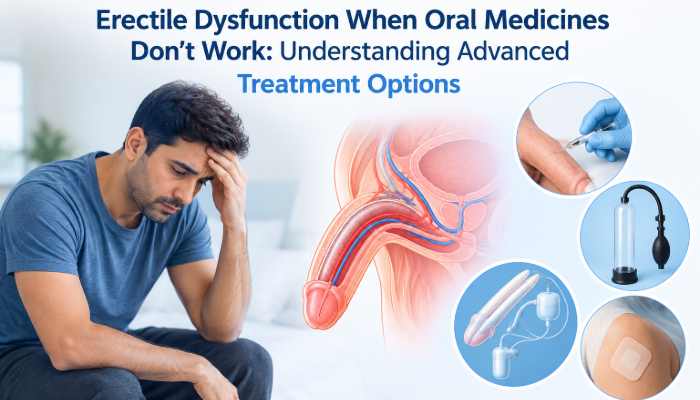
Erectile dysfunction (ED) is the inability to achieve or maintain an erection firm enough for satisfactory sexual activity. It is a common male sexual health condition and can occur because of several physical, psychological, hormonal and lifestyle-related factors.
For many men, oral medications known as phosphodiesterase type-5 (PDE5) inhibitors are an important part of ED treatment. However, not every man responds adequately to these medicines. Some may experience only partial improvement, while others may not achieve a satisfactory erection despite appropriate treatment.
When oral medication does not provide the expected results, it is important not to assume that there are no further options. A urologist or andrologist can reassess the underlying cause of ED and discuss other evidence-based and emerging treatment approaches based on the individual’s health, severity of ED and treatment history.
One of the areas receiving increasing attention is regenerative medicine, including autologous platelet-rich plasma (PRP) therapy.
What Is Erectile Dysfunction?
Erectile dysfunction is a persistent difficulty in achieving or maintaining an erection sufficient for sexual activity.
Occasional difficulty with erections can happen because of stress, tiredness, alcohol consumption or temporary emotional factors. However, recurrent or persistent erectile difficulties should be evaluated by a medical professional.
ED can be associated with:
- Diabetes
- High blood pressure
- High cholesterol
- Cardiovascular disease
- Obesity
- Smoking
- Hormonal abnormalities
- Certain medications
- Nerve-related conditions
- Pelvic or penile conditions
- Anxiety, stress or relationship difficulties
Because the blood vessels and nerves involved in erections are closely connected with overall health, persistent ED can sometimes be an early indication of an underlying medical condition.
Why Do ED Tablets Sometimes Not Work?
PDE5 inhibitors such as sildenafil and tadalafil can be effective for many men, but treatment response is not identical for everyone.
A lack of response does not necessarily mean that the medication itself is ineffective. The doctor may need to determine whether:
- The medication is being taken correctly.
- The timing of the medication is appropriate.
- The dose is suitable.
- Adequate sexual stimulation is present.
- An underlying medical condition is affecting erectile function.
- Testosterone or other hormonal factors need assessment.
- Psychological factors are contributing.
- The ED is particularly severe.
- Another treatment approach is more appropriate.
A medical reassessment is therefore important before simply increasing the dose or switching medications on your own.
What Can Be Done When Oral ED Medication Fails?
When oral medication does not provide adequate improvement, treatment can be individualized according to the cause and severity of ED.
Potential options may include:
1. Intracavernosal Injections
Intracavernosal therapy involves injecting medication directly into the erectile tissue of the penis.
These medications work through a different mechanism from oral PDE5 inhibitors and may be considered for men who do not respond adequately to oral treatment.
A healthcare professional should explain the correct technique, dose and potential side effects.
2. Vacuum Erection Devices
A vacuum erection device uses controlled negative pressure to draw blood into the penis and help produce an erection.
It can be an option for selected men, including those who cannot use certain medications or prefer a non-drug approach.
3. Low-Intensity Shockwave Therapy
Low-intensity shockwave therapy has been investigated as a treatment for erectile dysfunction, particularly in men where vascular factors may contribute to ED.
Research is ongoing, and treatment protocols vary between studies. Patients should discuss expected benefits, limitations and alternatives with a qualified specialist.
4. Penile Prosthesis
For men with severe, persistent ED who do not obtain satisfactory results from other treatments, penile prosthesis surgery may be considered.
A penile implant is a surgical treatment and is fundamentally different from regenerative approaches such as PRP. It may provide a long-term solution for appropriately selected patients.
5. Platelet-Rich Plasma Therapy
Autologous platelet-rich plasma is another treatment being investigated in the field of regenerative urology.
PRP is prepared from the patient’s own blood. A sample is collected and processed to concentrate platelets and associated growth factors. The resulting preparation may then be injected into the penile tissue.
The concept behind PRP is that platelets contain biologically active substances involved in processes such as tissue repair, cellular signaling and blood-vessel formation.
However, it is important to understand that PRP for ED remains an evolving treatment area and the available evidence is not yet definitive.
How Does PRP Therapy for Erectile Dysfunction Work?
PRP therapy begins with a blood sample taken from the patient.
The blood is processed using a centrifugation or preparation system to obtain a platelet-rich fraction. This concentrate contains a higher concentration of platelets than ordinary blood.
The prepared PRP is then administered through intracavernosal injections according to the treatment protocol selected by the treating specialist.
The proposed biological rationale is that growth factors released by activated platelets may support tissue repair and vascular processes involved in erectile function.
However, the exact mechanisms and the extent to which these biological effects translate into meaningful improvement in erectile function in humans remain under investigation.
What Does Recent Research Say About PRP for ED?
Research into PRP for erectile dysfunction has increased considerably in recent years.
A 2024 systematic review and meta-analysis of randomized controlled trials reported improvements in certain erectile-function measures compared with placebo, while also emphasizing the need for additional high-quality research. (PubMed)
Another 2024 meta-analysis involving four randomized controlled trials and 413 participants reported better erectile-function outcomes with PRP at some follow-up points. (PubMed)
More recent evidence illustrates why PRP should still be considered an emerging therapy rather than a guaranteed solution. A 2026 systematic review and meta-analysis of seven randomized controlled trials involving 512 participants found no consistent, clinically meaningful improvement with PRP monotherapy compared with placebo and highlighted differences between treatment protocols and limitations in the existing research. (PubMed)
An updated 2026 meta-analysis of platelet-rich therapies similarly concluded that the current evidence remains limited and that further high-quality studies are required to clarify the clinical role of these treatments. (PubMed)
What Does This Mean for Patients?
The evidence suggests that PRP is an area of active research, but it should not be presented as a guaranteed cure for ED.
Different studies have used different:
- PRP preparation systems
- Platelet concentrations
- Injection volumes
- Number of treatment sessions
- Injection intervals
- Patient populations
- Follow-up periods
These differences make it difficult to determine a single standardized PRP protocol that can be recommended for every patient.
Recent Indian Research on Autologous PRP After Failed Oral Treatment
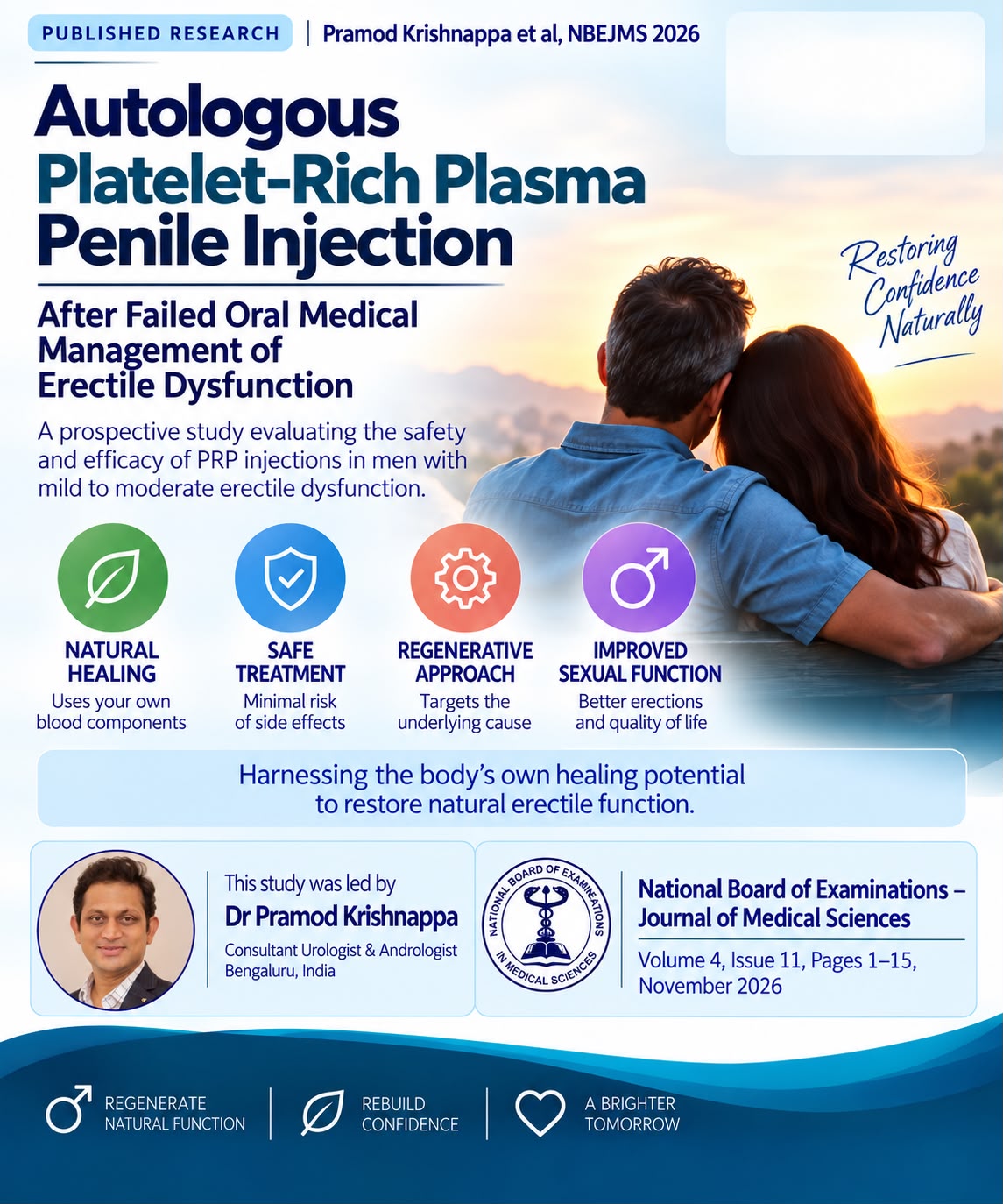
A recent prospective study published by researchers from the Department of Urology at NU Hospitals, Bengaluru, evaluated autologous intracavernosal PRP in men with erectile dysfunction who had not responded adequately to oral medical management.
The study included men with different grades of ED and administered two PRP injections one month apart. The researchers evaluated changes in erectile function over the subsequent follow-up period. (Orchidz Health)
The study reported improvement in erectile-function measures, with greater improvement observed among men with milder forms of ED. However, it was a single-arm study with a relatively small patient population and limited follow-up, so its findings should be interpreted alongside evidence from randomized controlled trials rather than viewed as definitive proof of efficacy. (Orchidz Health)
This research contributes to the growing scientific discussion surrounding regenerative approaches for ED and highlights the importance of continued clinical investigation.
Who May Be Considered for PRP Therapy?
PRP is not appropriate for every man with erectile dysfunction.
A specialist may first evaluate:
- The severity and duration of ED
- Previous response to oral medications
- Cardiovascular health
- Diabetes and metabolic conditions
- Blood pressure and cholesterol
- Hormonal factors
- Medication history
- Lifestyle factors
- Psychological or relationship factors
- Penile and urological health
The patient’s expectations are also important.
A specialist should explain whether PRP is appropriate, what evidence supports its use, what uncertainties remain and what alternative treatments are available.
Is PRP a Cure for Erectile Dysfunction?
PRP should not be described as a guaranteed cure for ED.
Although some clinical studies have reported improvements, other recent analyses have found that the evidence remains inconsistent. The variation in PRP preparation and treatment protocols is another important limitation.
The European Association of Urology has previously recommended that PRP for ED be used within clinical-trial settings, reflecting the need for stronger evidence. (Uroweb)
Therefore, patients considering PRP should have an informed discussion with a qualified urologist rather than choosing treatment solely because it is marketed as a regenerative or permanent solution.
Can ED Be Treated Without Injections?
Yes. Treatment depends on the underlying cause and patient preference.
Depending on the individual, management may include:
- Lifestyle modification
- Treatment of diabetes or cardiovascular risk factors
- Oral medications
- Vacuum erection devices
- Intracavernosal medication
- Psychosexual counselling where appropriate
- Low-intensity shockwave therapy
- Selected regenerative approaches
- Penile prosthesis surgery for appropriate patients
There is no single treatment that is suitable for every man.
Why Finding the Cause of ED Matters
Treating only the erection problem may not address the underlying reason for ED.
For example, ED may be associated with metabolic or cardiovascular risk factors. It may also be related to hormonal, neurological, medication-related or psychological factors.
A proper evaluation can help identify potentially reversible contributors and guide treatment.
This is particularly important when ED develops suddenly, becomes progressively worse or occurs together with other health concerns.
Lifestyle Changes That May Support Erectile Health
Medical treatment can be complemented by healthy lifestyle habits.
Men with ED may benefit from:
Regular Physical Activity
Exercise supports cardiovascular health and may improve overall vascular function.
Maintaining a Healthy Weight
Excess body weight is associated with several conditions that can contribute to erectile dysfunction.
Avoiding Smoking
Smoking can negatively affect blood vessels and cardiovascular health.
Limiting Excessive Alcohol
Heavy alcohol consumption can interfere with sexual function and overall health.
Managing Diabetes and Blood Pressure
Good control of metabolic and cardiovascular risk factors is important for long-term vascular health.
Managing Stress
Stress and anxiety can contribute to erectile difficulties and may also worsen existing ED.
When Should You See a Urologist?
Consider consulting a urologist or andrologist if:
- Erectile difficulties occur repeatedly.
- ED has continued for several weeks or months.
- Oral medication is not providing satisfactory results.
- You experience a significant change in erectile function.
- ED is affecting your relationship or quality of life.
- You have diabetes, hypertension or cardiovascular risk factors.
- You are considering injections, PRP or other advanced treatments.
Early evaluation can help identify the cause and provide a structured treatment plan.
The Importance of Individualized ED Treatment
Erectile dysfunction is not a one-size-fits-all condition.
One man may respond well to oral medication, while another may require a different approach. Some patients may benefit from a vacuum device or intracavernosal therapy, while selected men with persistent severe ED may eventually consider penile prosthesis surgery.
Regenerative treatments such as PRP are an evolving area of research. Current evidence is promising in some studies but remains inconsistent overall.
The most appropriate treatment should therefore be determined after a comprehensive evaluation by a qualified specialist.
Frequently Asked Questions About Erectile Dysfunction and PRP
1. What should I do if sildenafil or tadalafil is not working?
Do not increase the dose or change medication without medical advice. A urologist can review how the medicine is being used, assess underlying causes and discuss alternative treatment options.
2. Is PRP effective for erectile dysfunction?
Research has reported potential benefits, but results are inconsistent. Recent randomized-trial evidence does not establish a consistent clinically meaningful benefit over placebo, so PRP remains an evolving treatment area. (PubMed)
3. Is PRP a permanent cure for ED?
There is currently insufficient evidence to describe PRP as a permanent cure for erectile dysfunction.
4. Is PRP made from my own blood?
Yes. Autologous PRP is prepared from a patient’s own blood, which is processed to concentrate platelets.
5. How is PRP administered for ED?
The prepared platelet-rich plasma is administered through injections into the penile erectile tissue under the supervision of a qualified medical professional.
6. How many PRP sessions are needed?
There is no universally established treatment schedule. Research studies have used different numbers of injections and different intervals. The appropriate protocol depends on the treating specialist and the clinical situation.
7. Can PRP help if ED tablets have failed?
PRP has specifically been investigated in men who have not responded adequately to oral treatment. However, because evidence remains limited and inconsistent, it should be considered only after a specialist assessment. (Orchidz Health)
8. Is PRP suitable for severe erectile dysfunction?
Not necessarily. Patient selection is important, and the available evidence does not establish PRP as an effective treatment for every severity of ED.
9. Is PRP better than ED tablets?
There is currently no reliable evidence to conclude that PRP is generally better than established oral ED treatments. Treatment should be selected according to the individual patient’s condition.
10. Can PRP and shockwave therapy be combined?
PRP and low-intensity shockwave therapy have been studied both individually and in combination. Some research has reported potential benefits from combination treatment, but more high-quality research is required before definitive conclusions can be made. (PubMed)
11. Does erectile dysfunction mean I have a serious health problem?
Not necessarily, but persistent ED can sometimes be associated with cardiovascular, metabolic, hormonal or other medical conditions. A medical evaluation can help identify possible contributing factors.
12. Can stress cause erectile dysfunction?
Yes. Psychological factors such as anxiety, stress and relationship difficulties can contribute to ED. Physical and psychological causes can also occur together.
13. Can diabetes cause erectile dysfunction?
Yes. Diabetes can affect blood vessels and nerves involved in erectile function and is an important risk factor for ED.
14. Can lifestyle changes improve erectile function?
Healthy lifestyle measures such as regular physical activity, maintaining a healthy weight, avoiding smoking, moderating alcohol and controlling cardiovascular risk factors may support overall sexual and vascular health.
15. Which doctor should I consult for erectile dysfunction?
A urologist or andrologist can evaluate erectile dysfunction, identify possible causes and discuss suitable treatment options.
16. Should I stop my ED medication before considering PRP?
Do not stop or change prescribed medication without discussing it with your treating doctor. Your specialist can advise you based on your individual treatment plan.
17. Is PRP approved as a standard treatment for ED?
PRP remains an emerging treatment for ED, and professional guidance has highlighted the need for stronger evidence. Patients should discuss the experimental or evidence-limited nature of the treatment with their specialist before proceeding. (Uroweb)
18. What tests may be required for erectile dysfunction?
Depending on your medical history, a doctor may assess blood pressure, blood glucose, lipid profile, hormonal factors and other relevant health parameters. Additional investigations may be recommended when clinically indicated.
19. Can young men develop erectile dysfunction?
Yes. ED can affect younger men as well as older men. Causes may include psychological factors, lifestyle factors, medications, hormonal issues and certain medical conditions.
20. Is erectile dysfunction treatable?
In many cases, ED can be managed successfully with appropriate treatment. The best approach depends on the underlying cause, severity and individual health factors.
Conclusion
When oral medication does not provide satisfactory improvement in erectile dysfunction, there are several treatment pathways that a specialist can consider.
From lifestyle modification and oral medicines to vacuum devices, intracavernosal therapy, shockwave therapy and penile implants, treatment can be tailored to the individual.
Autologous PRP therapy is another area attracting considerable interest in regenerative urology. Research, including recent studies from India, has reported encouraging findings, but current evidence remains mixed and further high-quality clinical trials are needed to establish its long-term effectiveness and standardized treatment protocols. (Orchidz Health)
If you are experiencing persistent erectile difficulties or your current treatment is not providing satisfactory results, consult a qualified urologist or andrologist. A detailed evaluation can help identify the underlying cause and determine which treatment options may be appropriate for you.
Do not self-medicate or change prescribed ED medication without medical advice.