
Pain disorders in Urology
Various pain disorders in urology can cause long-standing bothersome pain affecting daily routine and mental health.
What are the causes of testis pain?
The common reasons for testis pain are varicocele, ureteric stone, chronic pelvic pain syndrome, epididymo-orchitis (infection), testicular torsion, inguinal hernia, mumps, and rarely cancer.
When should I consult a doctor for testis pain?
Any child who complains of testis pain should be brought to the hospital immediately for an early evaluation by a doctor so that the serious conditions like testicular torsion can receive early intervention. An adult may seek doctor consultation if his mild dull aching testis pain does not subside after 2-3 days of oral paracetamol tablet. If there is moderate-severe testis pain, then the adult should seek an early consultation with a doctor.
Is testis torsion serious?
Testis torsion is an emergency condition and commonly presents between 12-18 years of age but can happen at any age. Testis torsion is partly diagnosed by physical examination by a doctor but confirmed on ultrasound scan. Testis twists on its pedicle resulting in testis receiving less or no blood supply. One attempt at manual de-rotation of testis can be done if no severe pain, but most receive immediate surgical exploration to fix the rotated testis in normal position.
Can any surgery cure testis pain?
If no obvious cause for testis pain has been found (idiopathic) in adults after a detailed evaluation, then various options available to treat chronic orchalgia are oral medications, spermatic cord block injection, botox injection to spermatic cord, orchiopexy (? intermittent torsion) and microscopic spermatic cord denervation surgery.
Can sperm build up cause testis pain?
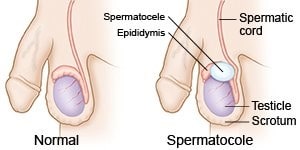
Sperm build-up can happen in spermatocele which can lead to bothersome pain if it increases rapidly in size over a period of few weeks.
Blue balls or epididymal hypertension refers to scrotal pain or a feeling of heaviness after sustained sexual arousal without orgasm and ejaculation.
Some men do notice relief of testis pain after ejaculation (masturbation or sexual intercourse).
What is chronic pelvic pain syndrome (CPPS) ?
Chronic pelvic pain syndrome is a diagnosis of exclusion where no obvious cause for pelvic pain is found by any investigations. This condition is frustrating both to the patient and doctor as there are no established treatment protocols offering complete relief to these patients. It could be due to intermittent pelvic muscle spasms which may require Botox injections, chronic infections of prostate requiring long term antibiotics, neuropathic disorders requiring medications to improve the nerves, pelvic physiotherapy, bladder neck relaxation medications , antidepressants and so on.
Frequently Asked Questions
Some causes of testicular pain can become more noticeable with physical activity or prolonged standing. Conditions such as varicocele are among the possible causes. Persistent or recurring testicular pain should be assessed by a urologist rather than assumed to be caused by physical strain.
The cause may not always be obvious from symptoms alone. A doctor can evaluate the pain through a clinical examination and, when appropriate, investigations such as an ultrasound. Testicular pain diagnosis is particularly important when discomfort is persistent, recurrent, or unexplained.
Yes. A ureteric stone can cause pain that is felt in the testicle because pain originating from the urinary tract may sometimes be experienced in another area. A proper evaluation can help identify the source of the discomfort. Kidney stone-related pain should be assessed according to the symptoms and examination findings.
Yes. An inguinal hernia can contribute to testicular or groin discomfort. If pain is accompanied by symptoms suggesting a groin problem, a medical examination can help determine whether a hernia is contributing to the discomfort. Inguinal hernia and testicular pain should be evaluated rather than self-diagnosed.
Yes. Epididymo-orchitis, an infection involving the epididymis and testicle, is one possible cause of testicular pain. Persistent pain accompanied by other concerning symptoms should be evaluated promptly. Testicular infection requires appropriate medical assessment to determine the underlying cause.
When no obvious cause is identified after detailed evaluation, chronic orchalgia may require different treatment approaches. Depending on the cause, options may include medications, spermatic cord block, Botox injection, orchiopexy in selected cases, or microscopic spermatic cord denervation. Chronic testicular pain treatment should therefore be individualized rather than relying on repeated self-medication.
Yes. Intermittent pelvic muscle spasms may contribute to chronic pelvic pain syndrome. Depending on the underlying problem, management may include pelvic physiotherapy, medications, or other approaches. Chronic pelvic pain treatment should be based on the findings of a proper medical evaluation.
Chronic pelvic pain syndrome may be considered a diagnosis of exclusion, meaning that no obvious cause is identified through the investigations performed. This can make the condition challenging to diagnose. Chronic pelvic pain syndrome therefore requires a systematic evaluation rather than assuming one specific cause.
It can. A spermatocele may become painful when it increases rapidly in size over a short period. If testicular discomfort or swelling is increasing, medical assessment can help determine the cause. Spermatocele-related testicular pain should be evaluated when symptoms are persistent or worsening.
No. Sudden or moderate-to-severe testicular pain warrants early medical assessment. Testicular torsion is an emergency because twisting can reduce or stop the blood supply to the testicle. Testicular torsion emergency requires immediate medical attention rather than waiting for the pain to settle.