Autologous Platelet-Rich Plasma Penile Injection After Failed Oral Medical Management of Erectile Dysfunction
Pramod Krishnappa,1,* Wasim Jafri,1 Prasanna Matippa,1 Maneesh Sinha,1 Kumar Prabhu1 and Venkatesh Krishnamoorthy1
1Deparment of Urology, NU Hospitals, Rajajinagar, Bangalore 560010, India
Accepted: 17-September-2026
Abstract
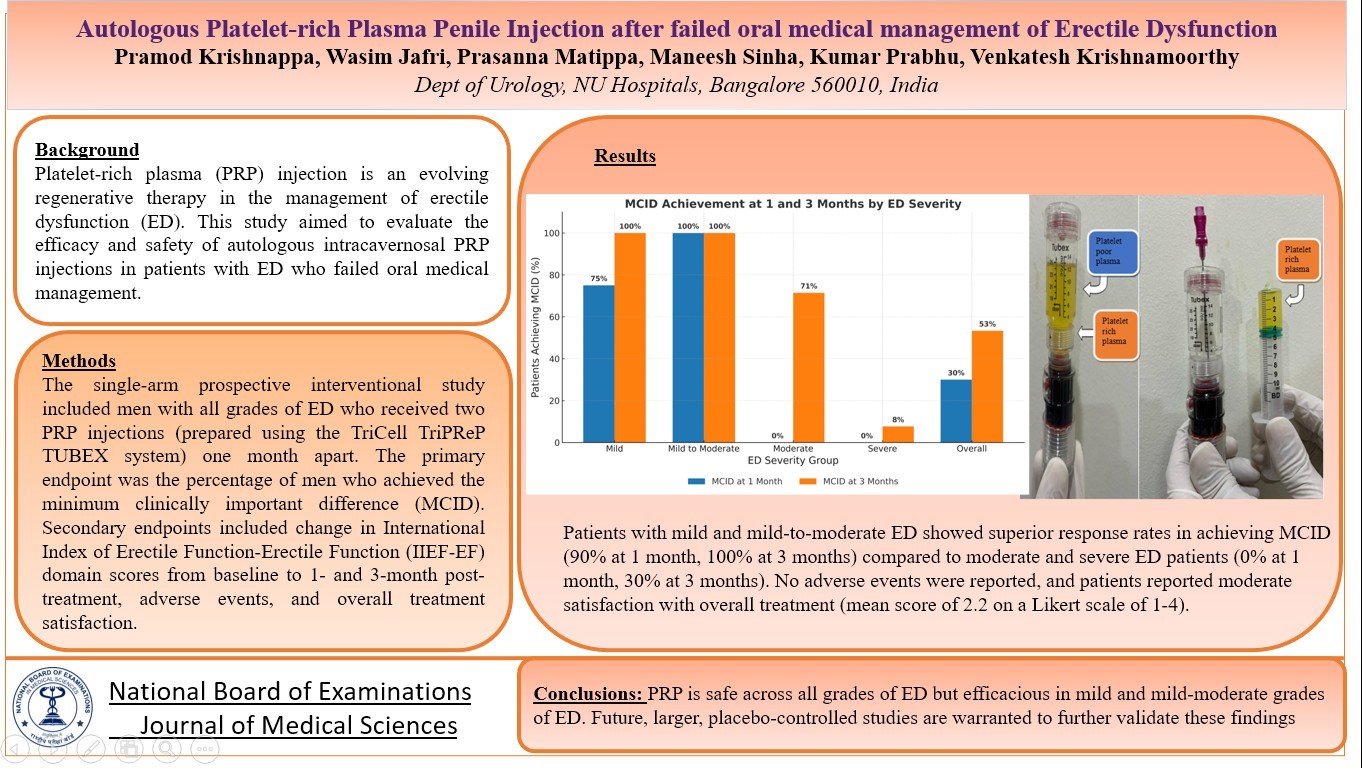
Objective: Platelet-rich plasma (PRP) injection is an evolving regenerative therapy in the management of erectile dysfunction (ED). This study aimed to evaluate the efficacy and safety of autologous intracavernosal PRP injections in patients with ED who failed oral medical management. Methods: The single-arm prospective interventional study included men with all grades of ED who received two PRP injections (prepared using the TriCell TriPReP TUBEX system) one month apart. The primary endpoint was the percentage of men who achieved the minimum clinically important difference (MCID). Secondary endpoints included change in International Index of Erectile Function-Erectile Function (IIEF-EF) domain scores from baseline to 1- and 3-month post-treatment, adverse events, and overall treatment satisfaction. Results: Thirty out of 32 enrolled patients completed the study protocol (mean age 36.53 years). Mean IIEF-EF scores significantly improved (p < 0.001) from baseline (13.01) to 1 month (15.9) and 3 months (18.03) post-treatment. MCID was achieved by 30% of patients at 1 month and 53.3% at 3 months, across all grades of ED. More importantly, patients with mild and mild-to-moderate ED showed superior response rates in achieving MCID (90% at 1 month, 100% at 3 months) compared to moderate and severe ED patients (0% at 1 month, 30% at 3 months). No adverse events were reported, and patients reported moderate satisfaction with overall treatment (mean score of 2.2 on a Likert scale of 1-4). Conclusion: PRP is safe across all grades of ED but efficacious in mild and mild-moderate grades of ED. Future, larger, placebo-controlled studies are warranted to further validate these findings.
Keywords: Erectile dysfunction, Platelet-rich plasma, P-shot, regenerative treatment, restorative therapy
Introduction
Contemporary management options of erectile dysfunction (ED) include lifestyle modifications, psychological interventions, oral phosphodiesterase inhibitors (PDE5i), intracavernosal injections of vasoactive drugs like alprostadil, vacuum erection devices, and penile prosthesis [1]. Despite the efficacy of these treatments, some patients may discontinue on-demand treatments, experience limited or no improvement, depriving them of natural-feeling erections, and most of these treatment options do not alter the underlying pathophysiologic mechanisms and offer on-demand erections [2]. Hence, newer regenerative treatment options such as platelet-rich plasma (PRP), low-intensity shockwave therapy and stem cell therapy are increasingly being studied [3].
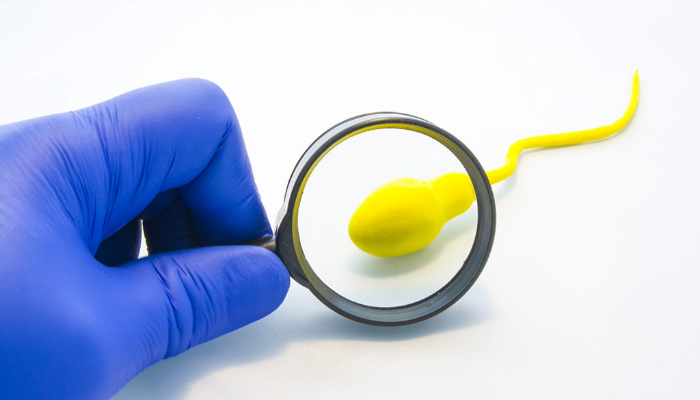
PRP is a yellow-coloured fluid that is obtained by centrifugation of whole blood and contains growth factors, including platelet-derived growth factor, vascular endothelial growth factor, epidermal growth factor, fibroblast growth factor, transforming growth factor β and insulin-like growth factor [4]. PRP is widely used in aesthetic dermatology(hair loss treatment and facial rejuvenation), sports medicine (to heal tendons, muscles),and orthopaedics (for knee osteoarthritis), and also sparingly used in ophthalmology (corneal ulcers), gynaecology (intrauterine adhesion, premature ovarian failure, thin endometrium) and cardiothoracic surgery (sternotomy complications, bronchial fistula) [5]. In urology, PRP has been evaluated in ED [6], Peyronie’s disease [7], and stress urinary incontinence [8] with variable results. Various meta-analyses [9,10] have reported both the safety and efficacy of PRP in ED and are mostly limited to mild and moderate grade ED.
Our study aimed to assess the safety and efficacy of autologous PRP injection in our Indian patients with all grades (mild, mild-moderate, moderate, and severe) of ED who were not responding to oral medications.
Methods
This single-arm prospective interventional study was conducted at the Department of Urology in a teaching hospital from July 2023 to May 2025 as a urology postgraduate thesis. The authors confirm the availability of, and access to, all original data reported in this study.
Inclusion & Exclusion Criteria
Inclusion criteria were men above 18 years of age with a diagnosis of ED for at least 3 months and having had a failed response to oral PDE5i. Failed response was defined as patients who had taken Sildenafil oral tablet up to 100 mg once daily or on-demand, and/or Tadalafil oral tablet up to 20 mg once daily or on-demand for at least 1 month. Exclusion criteria included men with uncontrolled diabetes (glycated haemoglobin>10), complex psychiatric illness, Peyronie’s disease, Priapism and prior penile surgery except circumcision.
Grading of erectile dysfunction
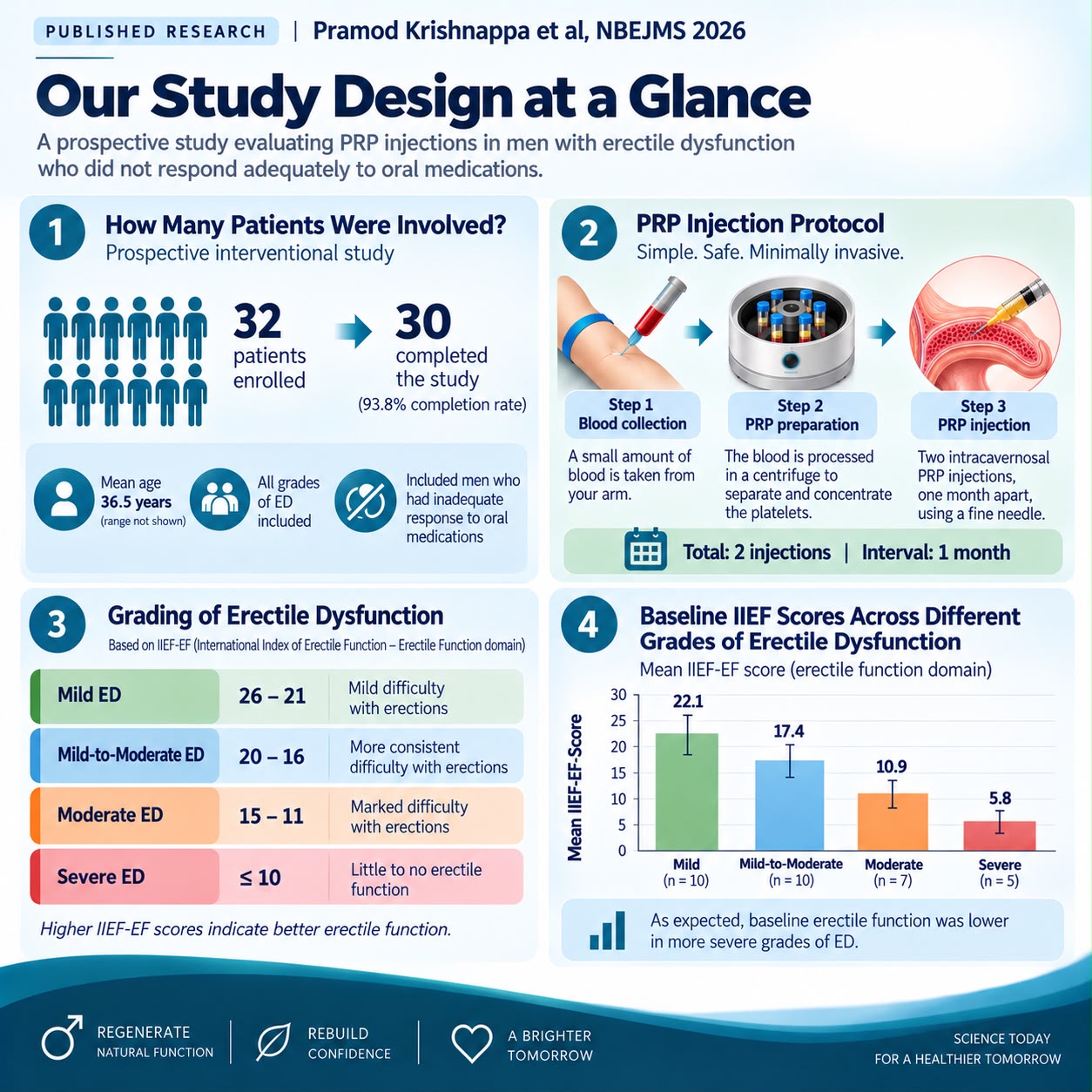
Erection was graded as per the International Index of Erectile Function - Erectile Function (IIEF-EF) domain score
[11]: no ED (26–30),
mild (22–25),
mild-to-moderate (17–21),
moderate (11–16),
and severe (6–10).
Institutional Review Board approval
The prospective interventional study received scientific advisory committee and institutional review board (IRB) approvals as part of the Urology postgraduate thesis program [National Board of Examinations in Medical Sciences (NBEMS) protocol code number TP231308921, dated 11/07/2023.
Study protocol and PRP concentration system
The study protocol consisted of two PRP intracavernosal injections administered one month apart. Patients were followed up at 1 month and 3 months after two injections (Figure 1).
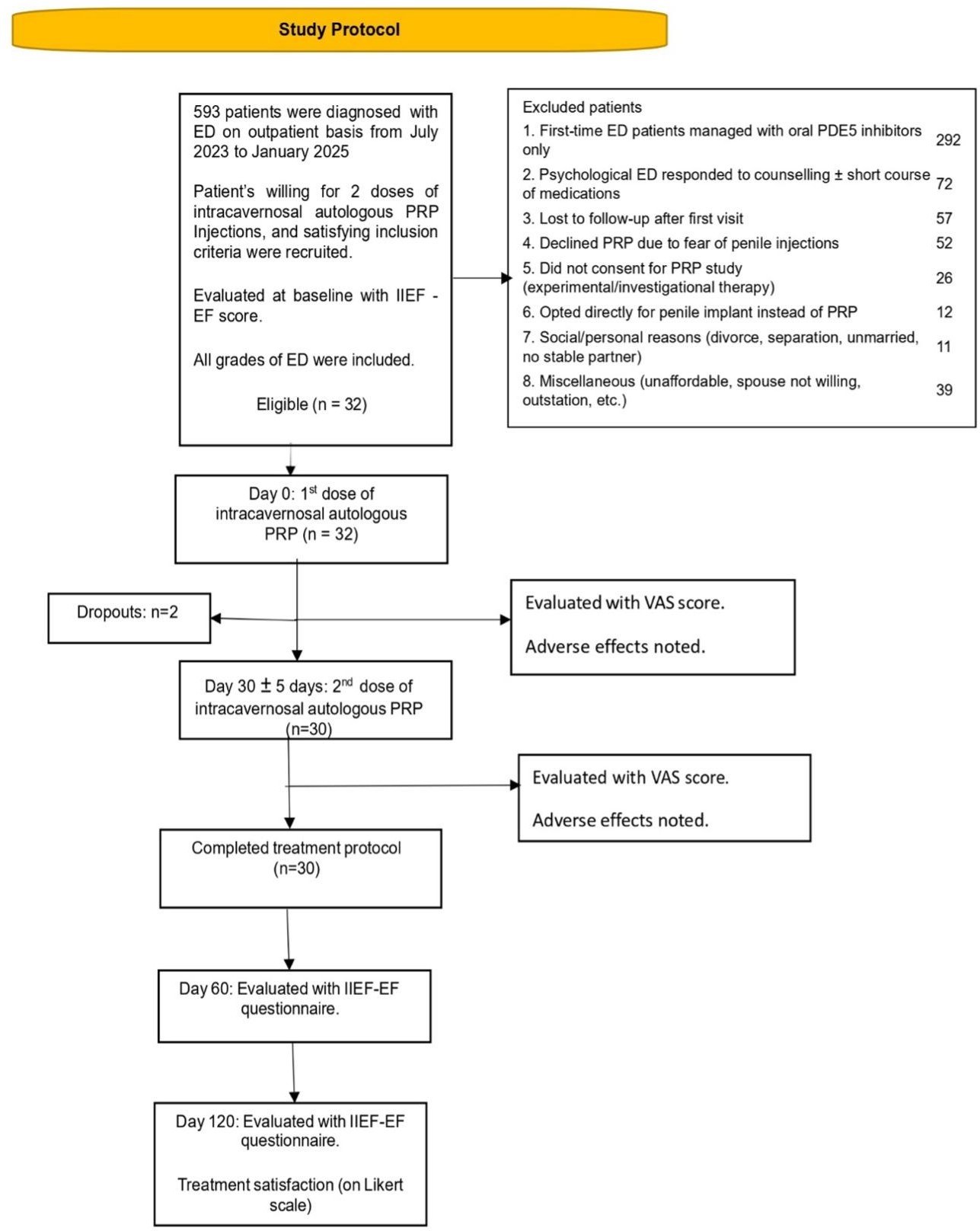
Figure 1: Participant flow diagram.
ED: Erectile Dysfunction| PRP: Platelet-rich plasma | IIEF-EF: International Index of Erectile Function -Erectile Function domain |VAS: Visual Analogue Scale | PDE5: Phosphodiesterase type 5
The patients received PRP injections generated in the TubexâTriPRePâcell concentration system (Moohan Enterprise, Gyeonggi-do, South Korea) (Figure 2) [12]. In each session, 20mL of the patient’s blood was drawn and loaded into the cell concentration system (TubexâTriPRePâ). Dual centrifugation was performed using REMI MEDICO PLUS centrifuge machine (REMI, Mumbai, India) at 3300 rpm for 12 minutes, followed by 3000 rpm for 3 minutes. Platelet concentration and PRP composition were not analysed prior to injection.
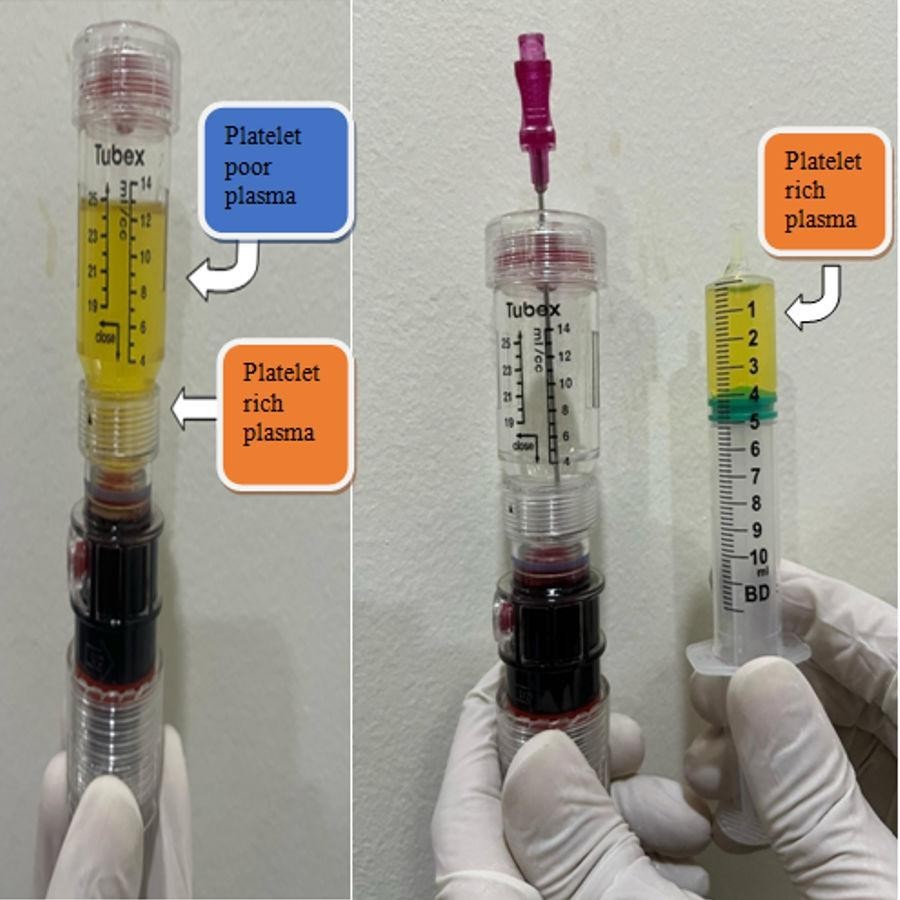
Figure 2: TubexâTriPRePâcell concentration system for platelet-rich plasma preparation.
Injection technique
The PRP (4ml) was aspirated (Figure 2) from the cell concentration system and injected by the urologist into one of the corpora cavernosa using a 21-gauge needle, under local anaesthesia (penile block) using 2% lignocaine. No tourniquet was applied. Patients were observed for 30 minutes after the procedure for any adverse events. Both the corpora cavernosa are separated by an incomplete midline septum [13], hence we hypothesized that injection into a single corpora would suffice to reduce patient discomfort and multiple injection sites.
Outcome measures and Follow-up
After each dose, the pain associated with the PRP injection, if any, was recorded using the Visual Analogue Scale (VAS) (0 = no pain and 10 = worst pain) at 30 minutes. A similar injection was repeated one month later. Patients were evaluated at baseline (before injection) and at 1 and 3 months after 2 PRP injections. Any change in their IIEF-EF domain score, as well as satisfaction on the Likert scale (1= dissatisfied, 2= somewhat satisfied, 3= satisfied, 4= very satisfied), was noted. Patients who were unwilling to undergo physical follow-up at 1 and 3 months after two PRP injections were contacted via email/WhatsApp to obtain their responses, as these were objective questionnaires.
Primary Outcomes
- To evaluate the change in IIEF - EF domain after PRP injection, from baseline, at 1 and 3 months after completion of the treatment protocol.
Secondary Outcomes
- The proportion of patients in each group (mild, mild-to-moderate, moderate, severe ED) attaining MCID in the IIEF-EF domain from baseline, at 1 and 3 months after completion of the treatment protocol.
- To identify any adverse effects associated with PRP injections (e.g. haematoma, ecchymoses, infection)
- To identify any treatment-induced pain (measured on a Visual analogue scale 1-10)
- Overall Satisfaction after treatment at 3 months of treatment (measured on a Likert scale 1-4).
Minimum clinically important difference (MCID)
The number of patients attaining the MCID was measured. The MCID was used in previous studies (Poulios et al. [6] and Masterson et al. [14]) on PRP in ED. MCID in our study was defined as a 2-point increase for mild or mild-moderate cases, a 5-point increase for moderate cases, and a 7-point increase for severe cases as per Rosen et al. [15]
Statistical analysis
Categorical data was represented in the form of frequency and percentage. The association between variables were assessed with the Chi-Square Test. Quantitative data were represented as mean and standard deviation. A comparison of variables was performed using a paired t-test. Statistical analyses were performed using IBM SPSS Statistics (Version 28; IBM Corp., Chicago, IL, USA), with the level of significance set at p < .05. The assumptions for parametric testing, such as normality, homogeneity of variance, and independence of observations, were not formally assessed due to the small sample size. The statistical analyses conducted are exploratory in nature and should be interpreted with caution. Further studies with larger sample sizes are needed to confirm these findings.
Results
Thirty patients completed the study protocol out of the 32 patients enrolled. Two patients were lost to follow-up after 1 PRP injection (1 due to a family issue and the other due to job concerns). The mean age of the patients was 36.53 +/- 7.73 years, the mean BMI was 27.04 +/- 5.6, the mean testosterone (total) level was 399.75 +/- 172 ng/dl, and five patients (16%) had diabetes (Table 1). The majority of the patients had severe ED (n=13, 43.3%), followed by moderate ED in 7 patients (23.3%), mild-to-moderate ED in 6 patients (20%) and mild ED in 4 patients (13.3%). Across all groups of ED, the mean IIEF-EF domain score was 13.10 +/- 6.06 at baseline, and 15.90 +/- 6.98 at 1 month and 18.03 +/- 7.67 at 3 months after treatment (Table 2). A paired t-test revealed a statistically significant improvement in IIEF-EF scores from baseline vs 1 month (t value -8.310, p <0.001), from baseline vs 3 months (t value -10.56, p <0.001) and 1-month vs 3 months (t value -6.89, p <0.001).
|
Baseline Characteristics |
Values |
|
Total patients (n) |
30 |
|
Mean Age (SD) in years |
36.53 (±7.73) |
|
BMI in kg/m², <25 (healthy) 25–29.9 (overweight) >=30 (obese) |
n (%) 8 (26.6) 15 (50) 7 (23.4) |
|
Mean Body Mass Index (BMI) in kg/m² |
27.04 |
|
Mean Total Testosterone (SD) in ng/dL |
499.75 (± 172.4) |
|
Diabetes Mellitus |
5 (16%) |
Table 1. Baseline characteristics
|
Erectile Dysfunction Severity |
International Index of Erectile Function - Erectile Function (IIEF-EF) domain scores |
||
|
At Baseline (Mean ± SD) |
At 1 month (Mean ± SD) |
At 3 months (Mean ± SD) |
|
|
Mild |
23 ± 1.41 |
25.5 ± 1.9 |
29 ± 1.15 |
|
Mild to moderate |
17.33 ± 0.82 |
22.16 ± 1.33 |
23.33 ± 1.97 |
|
Moderate |
15.14 ± 1.86 |
18.29 ± 1.89 |
21.57 + 2.3 |
|
Severe |
7.0 ± 1.35 |
8.77 ± 2.38 |
10.31 ± 3.4 |
|
Total |
13.10 + 6.06 |
15.90 + 6.98 |
18.03 + 7.67 |
Table 2. International Index of Erectile Function -Erectile Function domain scores at baseline, 1 and 3 months after completion of treatment protocol.
MCID at 1 month
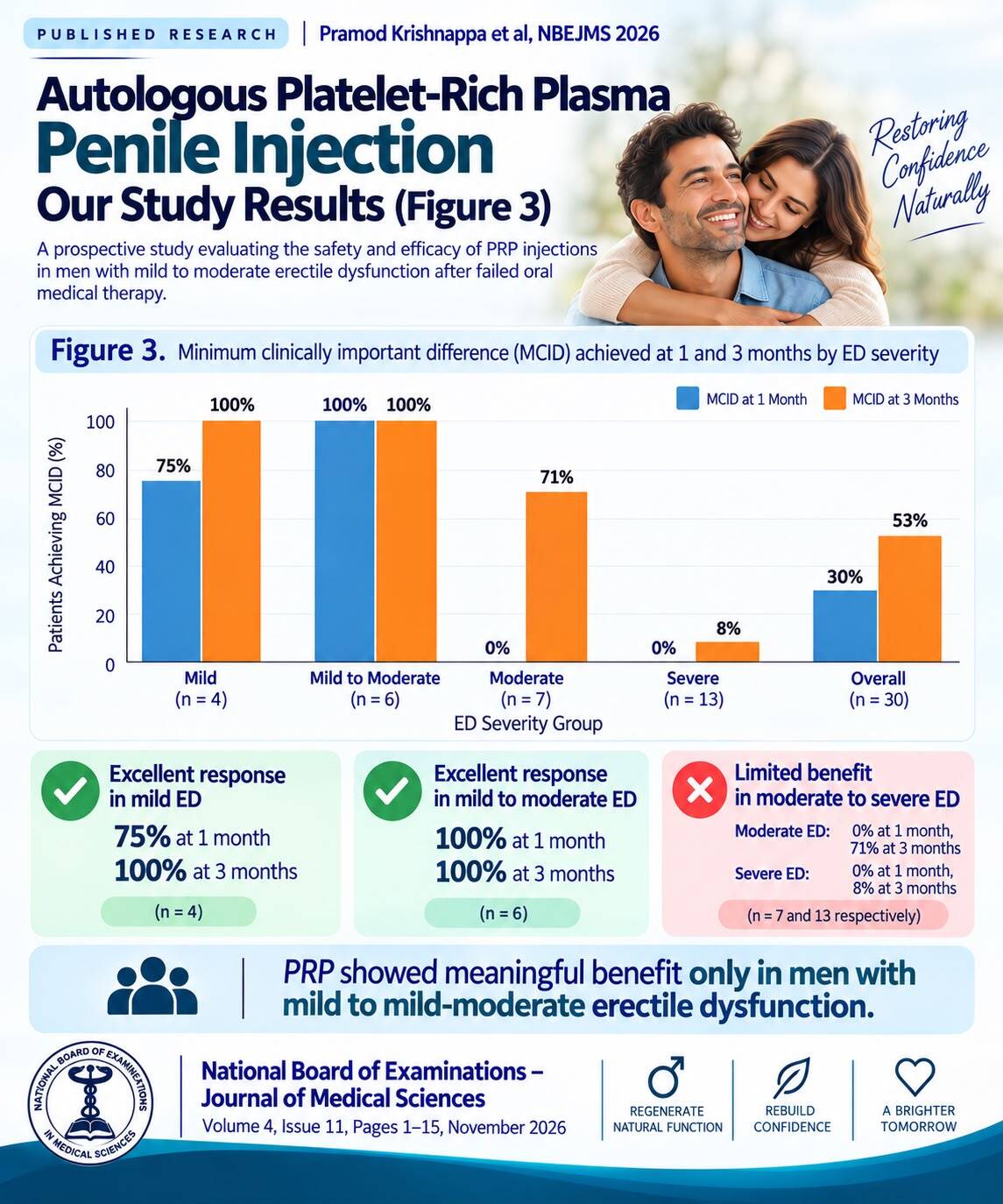
9 out of 10 patients in the mild and mild-to-moderate ED groups achieved the MCID at one month, whereas no patients in the moderate and severe ED groups reached the MCID within the same timeframe. Hence, MCID was significantly dependent (χ2 Value 26.45, p < 0.001) on the grade of ED at 1 month (Table 3 and Figure 3).
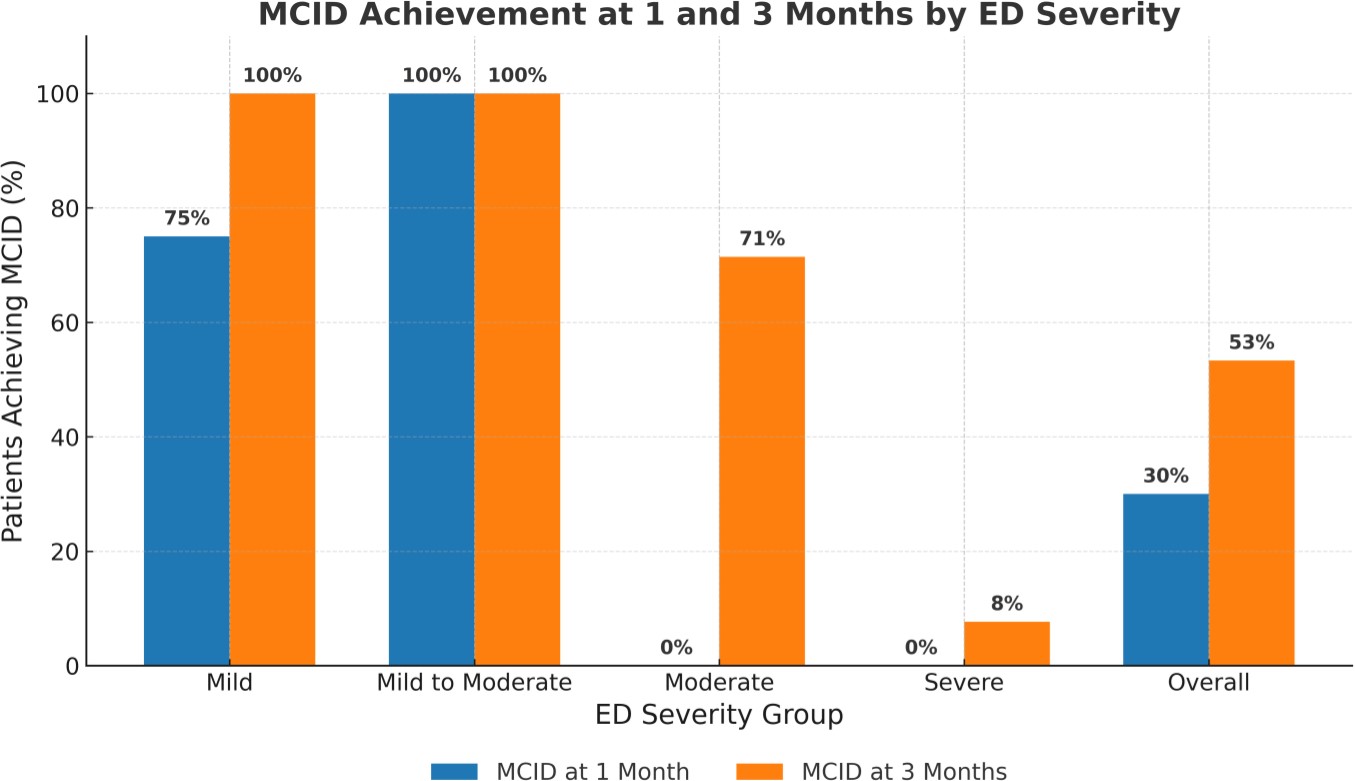
Figure 3. Minimum clinically important difference (MCID) achieved as per erectile dysfunction (ED) severity.
MCID at 3 months
All (10/10) patients in the mild and mild-to-moderate ED groups achieved MCID, whereas only 6 of 20 patients in the moderate and severe ED groups showed MCID. Hence, MCID was significantly dependent (χ2 Value 20.55, p < 0.001) on the grade of ED at 3 months, also (Table 3 and Figure 3).
Average pain score on VAS after 30 minutes of PRP injection was 1.37/10 for the 1st injection and 1.47/10 for the 2nd injection. No adverse effects were noted. Overall satisfaction (on Likert scale 1- 4): 2.9 (mean) in the mild and mild-moderate ED group and 1.85 in the moderate and severe ED group.
|
Erectile Dysfunction Severity |
Patients who achieved MCID by 1 Month |
Patients who achieved MCID by 3 Months |
||||
|
YES |
Chi Square test |
YES |
Chi Square test |
|||
|
Number of patients |
χ2 Value |
P value |
Number of patients |
χ2 Value |
P value |
|
|
Mild |
3/4 |
26.43 |
P<0.001 |
4/4 |
20.55 |
P<0.001 |
|
Mild to moderate |
6/6 |
6/6 |
||||
|
Moderate |
0/7 |
5/7 |
||||
|
Severe |
0/13 |
1/13 |
||||
|
Total |
9/30 |
16/30 |
||||
Table 3. Minimal Clinically Important Difference (MCID) at 1 and 3 months based on the grade of erectile dysfunction
Discussion
Lifestyle modification and comorbidity optimisation are always the primary interventions in the management of ED, followed by oral PDE5i [1]. Kim et al assessed the responses of 485 patients who had discontinued oral PDE5i despite successful intercourse. The reasons for discontinuation of PDE5i were reluctance to engage in medication-dependent intercourse each time, spontaneous recovery of erectile function, high cost of repeated medicine intake over many years, concerns about side-effects, psychological burden of scheduled sexual intercourse and priority on other comorbidity treatment [2]. Intracavernosal injections of vasoactive drugs like alprostadil, although efficacious, are not preferred for long-term use by many due to the pain and inconvenience of use [16]. Penile Prostheses have good satisfaction rates, but not everybody is satisfied with the concept of an artificially erect penis following a penile prosthesis [17]. Penile prosthesis is an out-of-pocket expense in many developing countries where it is not covered under insurance [18]. Hence, restorative therapies such as PRP, low-intensity shockwave therapy and stem cell therapy are gaining momentum, which address the underlying problem resulting in natural erections.
The American Urological Association guidelines on ED (last updated in 2018) issued an expert opinion statement that PRP therapy should be considered experimental [19]. However, a lot has changed since 2018, and the AUA statement of 2018 requires revision in light of the evolving data on PRP in ED. The 2025 EAU guidelines on ‘sexual and reproductive health’ state that PRP intracavernosal injections have led to a mild improvement of erectile function among patients with organic ED. However, the available evidence remains insufficient to recommend its use (Level of Evidence 1b) [1].
Our study was a part of the Urology postgraduate thesis, which aimed to assess the role of PRP injection in ED in our Indian men. PRP was first described in the 1970s when it was first used to treat thrombocytopenia [20]. Platelets were initially assumed to have only coagulation function, but it was later realised that platelets contain growth factors and cytokines which can cause inflammation, angiogenesis, stem cell migration, and cell proliferation. Upon activation of the platelets, the P-granules are degranulated and lead to the release of various growth factors [21].
Poulios et al. used an FDA-approved autologous platelet separator (Magellan Autologous Platelet Separator; Arteriocyte Medical Systems, Hopkinton, MA), which yielded 10 mL of PRP (5ml into each corpora cavernosa). Masterson et al used the Arthrex Angel PRP system, which yielded 5ml PRP (2.5ml into each corpus cavernosum) from 120ml whole blood. Our study used the TubexâTriPRePâcell concentration system (Moohan Enterprise, Gyeonggi-do, South Korea), which yielded 4ml PRP (injected into one corpus). As both corpora cavernosa is interconnected by an incomplete midline septum, we decided to inject into one corpora cavernosa only. The reason for choosing the TubexâTriPRePâ is that its safety and efficacy have already been evaluated in facial wrinkles and knee osteoarthritis by Mehryan et al. [22] and Angoorani et al. [23].
Two PRP injections were given one month apart in our study, similar to the study by Poulios et al. [6] and Masterson et al. [14]. In contrast, Tas et al. [24] and Shaher et al. [25] gave three PRP injections with a 15-day interval between the injections.
There is no standardised, consistent PRP preparation protocol as regenerative therapy is still in its evolving phase.
Safety
All studies [6,14,24,25] have confirmed the safety of PRP. Our study and the study by Poulios et al. reported no complications. In our study, a single urology resident performed the preparation of PRP injection for all study patients, and all injections were done by a single urology consultant to maintain the uniformity of the preparation protocol and injection technique. Masterson et al. [14] reported that 1 (out of 28) patient developed a plaque following PRP injection, and 1 (out of 33) patient developed a hematoma following a placebo injection.
Efficacy
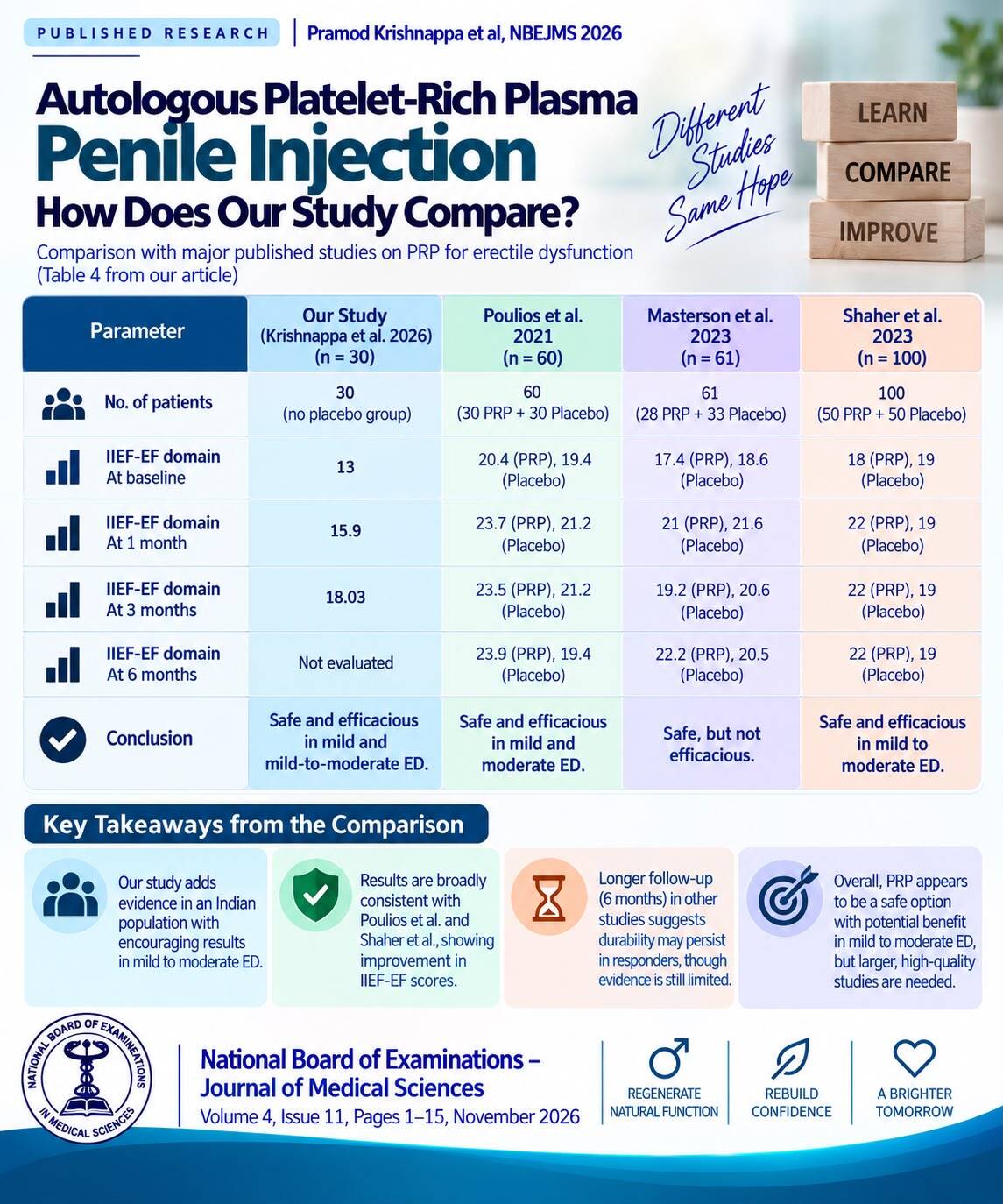
The outcomes of 3 major studies [6,14,25] on this topic have been tabulated and compared with our study in Table 4. Overall, studies by Poulios et al. [6] and Shaher et al. [25] concluded that PRP is efficacious for mild and mild-to-moderate ED, findings consistent with our study. The only study to negate the efficacy was by Masterson et al. [14] The Chi-square test in our study revealed a significant association between ED severity and the likelihood of achieving MCID at 1 and 3 months with PRP injections. The more severe the ED, the less likely PRP is to help (Table 3).
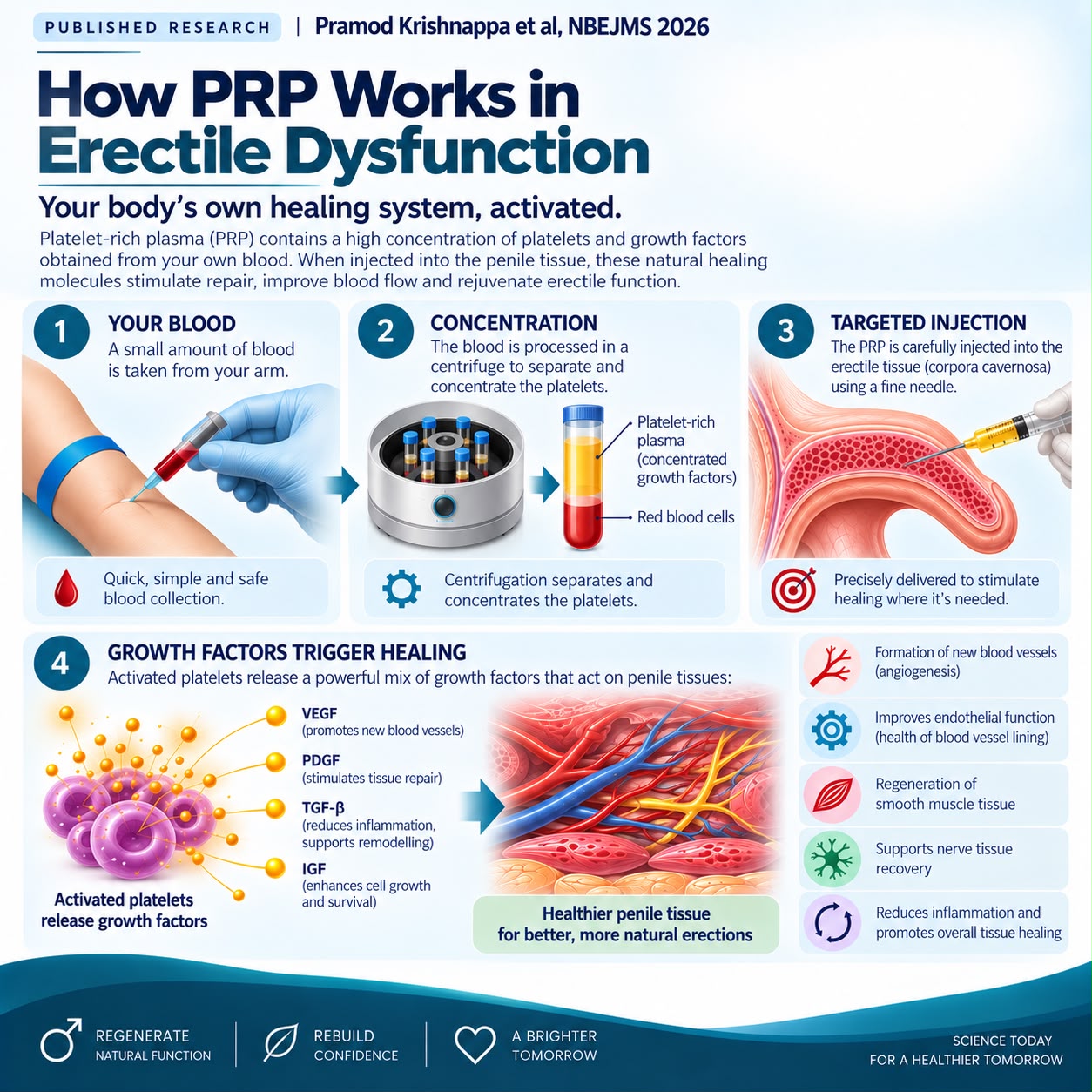
Platelet-rich plasma exerts its regenerative potential by releasing multiple bioactive growth factors and cytokines that promote angiogenesis, endothelial repair, neural regeneration, and smooth muscle proliferation within the corpora cavernosa [4]. Upon platelet activation, α-granules release platelet-derived growth factor, vascular endothelial growth factor, transforming growth factor-β, and insulin-like growth factor, which collectively enhance neovascularisation, tissue remodelling, and cellular proliferation. These mechanisms may improve cavernosal blood flow and endothelial function, particularly in early-stage erectile dysfunction, where residual erectile tissue integrity is preserved [4]. However, in advanced ED with extensive fibrosis or neurovascular damage, the regenerative capacity of PRP may be limited, which likely explains the differential clinical response observed across ED severity grades in our study.
|
Parameters |
Our Study |
Poulios et al. [6] (Placebo-controlled) |
Masterson et al. [14] (Placebo controlled) |
Shaher et al. [25] (Placebo-controlled) |
|
No. of patients |
30 (no placebo group) |
60 (30 Placebo+ 30 PRP) |
61 (28 PRP + 33 Placebo) |
100 (50 PRP + 50 Placebo) |
|
Severity of ED (n) |
||||
|
Mild |
4 (13.33%) |
20 (33%) |
37 (60%) |
28 (28%) |
|
Mild-to- moderate |
6 (20%) |
32 (54%) |
53 (53%) |
|
|
Moderate |
7 (23%) |
8 (13%) |
24 (40%) |
19 (19%) |
|
Severe |
13 (43%) |
Not included |
Not included |
Not included |
|
IIEF-EF domain (n) |
||||
|
At baseline |
13 |
20.4 (PRP), 19.4 |
17.4 (PRP), 18.6 |
18 (PRP), 19 |
|
(Placebo) |
(Placebo) |
(Placebo) |
||
|
At 1 month |
15.9 |
23.7 (PRP), 21.2 (Placebo) |
21 (PRP), 21.6 (Placebo) |
22 (PRP), 19 (Placebo) |
|
At 3 months |
18.03 |
23.5 (PRP), 21.2 (Placebo) |
19.2 (PRP), 20.6 (Placebo) |
22 (PRP), 19 (Placebo) |
|
At 6 months |
Not evaluated |
23.9 (PRP), 19.4 (Placebo) |
22.2 (PRP), 20.5 (Placebo) |
22 (PRP), 19 (Placebo) |
|
Patients with MCID |
||||
|
At 1 month |
9 (30%) |
22/29 (76%) in PRP group. 7/28 (25%) in placebo group. |
14/24 (58.3%) in PRP group. 15/28 (53.6%) in placebo group. |
38/50(76%) in PRP group. 9/50 (18%) in placebo group. |
|
At 3 months |
16 (53.3%) |
20/29 (69%) in PRP group. 10/26 (39%) in placebo group. |
10/24 (41.7%) in PRP group. 13/25 (52%) in placebo group. |
36/50 (72%) in PRP group. 8/50 (16%) in placebo group. |
|
At 6 months |
Not evaluated |
20/29 patients (69%) in PRP group. 7/26 patients (27%) in placebo group. |
12/20 patients (60%) in PRP group. 10/24 patients (41.7%) in placebo group. |
35/50 (70%) in PRP group. 8/50(16%) in placebo group. |
|
Complications |
None |
None |
1 patient had hematoma, another had penile plaque formation |
None |
|
Pain score (on VAS) |
1.37 – 1.47 (mean 1.42) |
2 |
3.5-4.1 |
1.52 |
|
Conclusion |
Safe and efficacious in mild and mild-to-moderate ED. |
Safe and efficacious in mild and moderate ED. |
Safe, but not efficacious. |
Safe and efficacious in mild to moderate ED. |
Table 4. Comparison of various studies on Platelet-rich plasma injection in erectile dysfunction
ED: Erectile Dysfunction| PRP: Platelet-rich plasma | IIEF-EF: International Index of Erectile Function -Erectile Function domain |VAS: Visual Analogue Scale
Limitations
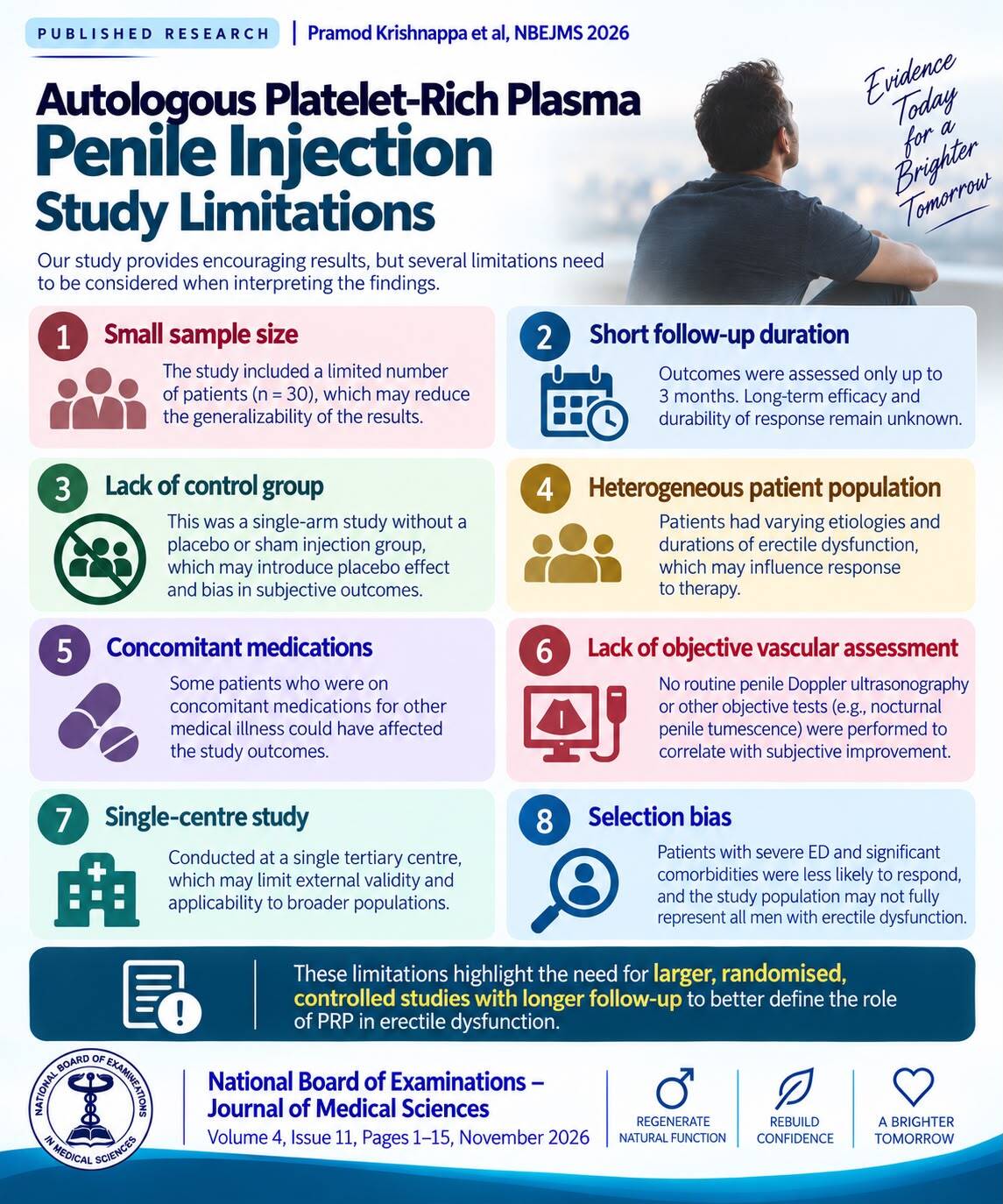
- A placebo-control group was not included,
- Qualitative and quantitative analysis of each PRP sample, including platelet concentration, platelet ultrastructure, growth factors, cytokines, and other regenerative molecules, was not assessed,
- lack of standardised protocols for PRP preparation, dosage, and delivery, which hinders uniformity,
- small sample size,
- relatively short follow-up time of 3 months,
- tourniquet was not applied at base of penis after PRP injection for 30 min, as described in other studies [6,14].
- requires external validation by involving multiple centres of varied population groups
Conclusions
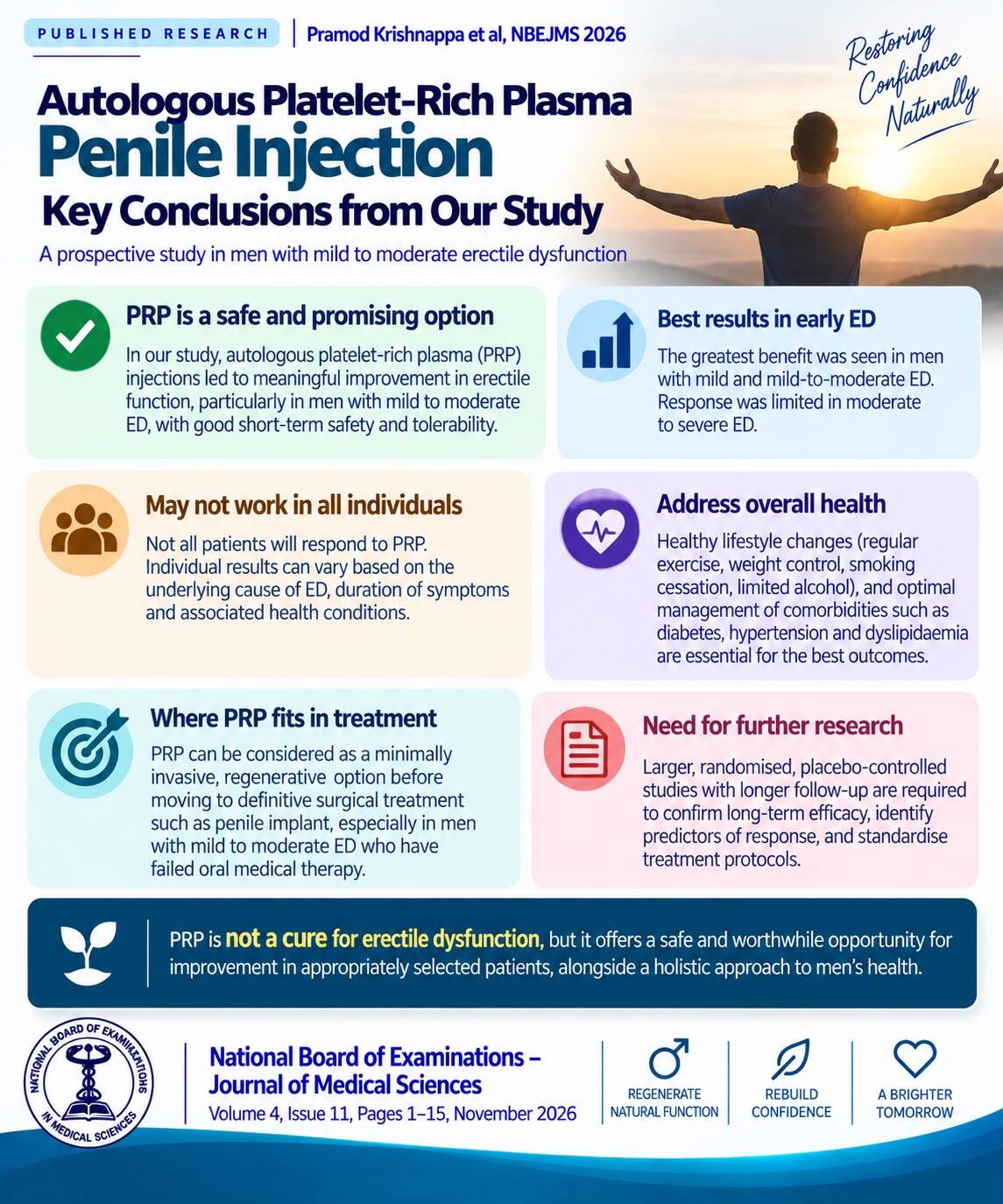
Intracavernosal autologous PRP injections, administered as two doses one month apart, have been found to be safe and well-tolerated across all grades of ED in patients who have previously failed oral PDE5i therapy. Clinically significant improvement, as measured by the achievement of the MCID, was primarily observed in patients with mild and mild-to-moderate ED. In contrast, responses in individuals with moderate and severe ED were limited and delayed. These findings imply that PRP may serve as a restorative adjunct therapy in carefully selected patients with early-stage ED, rather than as a universal treatment for all severities of ED. Considering the absence of a placebo control group, small sample size, lack of PRP characterization, and brief follow-up period, PRP should not currently be regarded as a first-line treatment. Well-designed multicenter randomised placebo-controlled trials with standardized PRP preparation protocols and extended follow-up are essential to establish its precise therapeutic role and long-term efficacy.
Authors’ Contributions
Study concept and design: PK, WJ, PM, MS, KP, VK; Data acquisition: WJ, PK; Data analysis: PK, WK; Drafting of manuscript: PK, WJ, PM; Critical revision of the manuscript: PK, WJ, PM, MS, KP, VK
Ethical Approval
Ethics Committee approval reference number: NUH/IEC/2023/07/04, dated 10/07/2023. Institutional Thesis Protocol approval reference number: NUTH/NBE/2023/08/02, dated 29/08/2023].
Informed Consent
All study patients consented to participate, and the IRB verified the consent forms at each 6-monthly review meeting.
>Conflicts of interest
The authors declare that they do not have conflict of interest.
Funding
No funding was received for conducting this study.
References
- Salonia A, Bettocchi C, Capogrosso P, Carvalho J, Corona G, Hatzichristodoulou G, et al. EAU guidelines: sexual and reproductive health. 2025.
https://uroweb.org/guideline/sexual-and-reproductive-health/. - Kim SC, Lee YS, Seo KK, Jung GW, Kim TH. Reasons and predictive factors for discontinuation of PDE-5 inhibitors despite successful intercourse in erectile dysfunction patients. Int J Impot Res 2014 May–Jun;26(3):87–93.
- Hinojosa-Gonzalez DE, Saffati G, Orozco Rendon D, La T, Kronstedt S, Muthigi A, et al. Regenerative therapies for erectile dysfunction: a systematic review, Bayesian network meta-analysis, and meta-regression. J Sex Med 2024 Dec 1;21(12):1152–1158.
- Pavlovic V, Ciric M, Jovanovic V, Stojanovic P. Platelet Rich Plasma: a short overview of certain bioactive components. Open Med (Wars) 2016 Aug 12;11(1):242–247.
- Zhang Z, Liu P, Xue X, Zhang Z, Wang L, Jiang Y, Zhang C, Zhou H, Lv S, Shen W, Yang S, Wang F. The role of platelet-rich plasma in biomedicine: A comprehensive overview. iScience 2025 Jan 3;28(2):111705.
- Poulios E, Mykoniatis I, Pyrgidis N, Zilotis F, Kapoteli P, Kotsiris D, et al. Platelet-Rich Plasma (PRP) Improves Erectile Function: A Double-Blind, Randomized, Placebo-Controlled Clinical Trial. J Sex Med 2021 May;18(5):926–935.
- Achraf C, Abdelghani PA, Jihad PEA. Platelet-rich plasma in patients affected with Peyronie's disease. Arab J Urol 2022 Oct 25;21(2):69–75.
- Jiang YH, Lee PJ, Kuo HC. Therapeutic Efficacy of Urethral Sphincter Injections of Platelet–Rich Plasma for the Treatment of Stress Urinary Incontinence due to Intrinsic Sphincter Deficiency: A Proof–of–Concept Clinical Trial. Int Neurourol J 2021 Mar;25(1):51–58.
- Suharyani S, Leonardo M, Oentoeng HH, Pardamean LumbanTobing ER, Tansol C, Hariyanto TI. Efficacy and safety of platelet-rich plasma intracavernous injection for patients with erectile dysfunction: A systematic review, meta-analysis, and meta-regression. Asian J Urol 2024 Oct;11(4):545–554.
- Deabes M, Deameh MG, Bani Irshid BA, Al Darraji AH, Serag I, Almosilhy NA, et al. Evaluating the efficacy and safety of platelet-rich plasma injection for erectile dysfunction: a systematic review and meta-analysis of randomized controlled trials. Sex Med Rev 2024 Sep 25;12(4):739-746.
- Rosen RC, Riley A, Wagner G, Osterloh IH, Kirkpatrick J, Mishra A. The international index of erectile function (IIEF): a multidimensional scale for assessment of erectile dysfunction. Urology. 1997 Jun;49(6):822-30. doi: 10.1016/s0090-4295(97)00238-0.
- TriCellTriPReP® Tubex® PRP/CGF Cell Concentration System. Seongnam-si, Korea: Rev-Med Inc.; 2021. Available from: https://www.tricellbio.com/wp-content/uploads/2021/07/TriCell-Tubex-PRP-Kit-Brochure.-pdf.pdf.
- Smith RP, Krzastek S, Harrison LS. Surgical, radiographic, and endoscopic anatomy of the male reproductive system. In: Dmochowski RR, Kavoussi LR, Peters CA, editors. Campbell-Walsh-Wein Urology. 13th ed. Philadelphia: Elsevier; 2025. p. 1365–68.
- Masterson TA, Molina M, Ledesma B, Zucker I, Saltzman R, Ibrahim E, et al. Platelet-rich Plasma for the Treatment of Erectile Dysfunction: A Prospective, Randomized, Double-blind, Placebo-controlled Clinical Trial. J Urol 2023 Jul;210(1):154–161.
- Rosen RC, Allen KR, Ni X, Araujo AB. Minimal clinically important differences in the erectile function domain of the International Index of Erectile Function scale. EurUrol 2011 Nov;60(5):1010–6.
- Sung HH, Ahn JS, Kim JJ, Choo SH, Han DH, Lee SW. The role of intracavernosal injection therapy and the reasons of withdrawal from therapy in patients with erectile dysfunction in the era of PDE5 inhibitors. Andrology 2014 Jan;2(1):45–50.
- Shivananda MJ, Arora K, Akshatha CJ. A Rare Presentation of Suicidality Following Penile Implant Surgery. Journal of Psychosexual Health2025;7(3):303–304. doi:10.1177/26318318251347023
- Krishnappa P, Tripathi A, Shah R. Surgical Outcomes and Patient Satisfaction With the Low-Cost, Semi-Rigid Shah Penile Prosthesis: A boon to the Developing Countries. Sex Med 2021 Aug;9(4):100399.
- Burnett AL, Nehra A, Breau RH, Culkin DJ, Faraday MM, Hakim LS, et al. Erectile Dysfunction: AUA Guideline J Urol. 2018 Sep;200(3):633–641. doi: 10.1016/j.juro.2018.05.004. Epub 2018 May 7. Erratum in: J Urol. 2022 Mar;207(3):743. doi: 10.1097/JU.0000000000002389. Erratum in: J Urol. 2022 Mar;207(3):743. doi: 10.1097/JU.0000000000002436.
- Alves R, Grimalt R. A Review of Platelet-Rich Plasma: History, Biology, Mechanism of Action, and Classification. Skin Appendage Disord 2018 Jan;4(1):18–24.
- Blair P, Flaumenhaft R. Platelet alpha-granules: basic biology and clinical correlates. Blood Rev 2009 Jul;23(4):177–89.
- Mehryan P, Zartab H, Rajabi A, Pazhoohi N, Firooz A. Assessment of efficacy of platelet-rich plasma (PRP) on infraorbital dark circles and crow's feet wrinkles. J Cosmet Dermatol 2014 Mar;13(1):72–8.
- Angoorani H, Mazaherinezhad A, Marjomaki O, Younespour S. Treatment of knee osteoarthritis with platelet-rich plasma in comparison with transcutaneous electrical nerve stimulation plus exercise: a randomized clinical trial. Med J Islam Repub Iran 2015 Jun 27;29:223.
- Taş T, Çakıroğlu B, Arda E, Onuk Ö, Nuhoğlu B. Early Clinical Results of the Tolerability, Safety, and Efficacy of Autologous Platelet-Rich Plasma Administration in Erectile Dysfunction. Sex Med 2021 Apr;9(2):100313.
- Shaher H, Fathi A, Elbashir S, Abdelbaki SA, Soliman T. Is Platelet Rich Plasma Safe and Effective in Treatment of Erectile Dysfunction? Randomized Controlled Study. Urology 2023 May;175:114–119.