
Intrauterine Insemination (IUI)
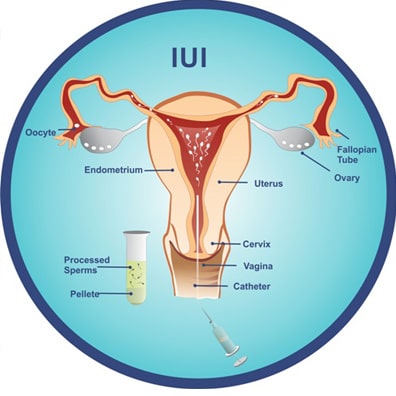
What is IUI?
The insemination of processed sperms through a catheter, into the uterus with the aim of attaining a pregnancy is IUI.
What are the prerequisites for IUI?
It is done around the time of ovulation when the mature egg is released into the fallopian tubes. The fallopian tubes must be patent for IUI to be successful. Sperm count and motility should be good enough. There must not be a major problem in the uterus like a large polyp or fibroid close to the uterine cavity.
What are the indications for IUI?
- Low sperm count and motility (a minimum of 10 million motile sperms must be present in the processed sample of sperms.
- Problems with sexual intercourse – Erectile dysfunction, vaginismus
- Use of donor sperms
- Unexplained infertility
- Multiple cycles of failed Ovulation Induction
What to expect on the day of IUI?
Your doctor will confirm the ovulation. Husband is asked to give semen by masturbation for processing. The immotile sperms are separated from motile sperms by using sperm preparation techniques. This will take 60-90 minutes.
The sampled sperm must be injected into the uterine cavity within 30 minutes of completion of the processing
What is the success rate with IUI?
One cycle of IUI is associated with a pregnancy rate of 18-20%. 6 cycles of IUI is associated with a cumulative pregnancy rate of 50-60%.
Which doctor is best for IUI?
Dr Sneha J is a Gynecologist and best fertility specialist. She has completed MD OBG from the top university AIIMS , Delhi and University fellowship in Fertility/ Reproductive medicine. She had further training in dealing with these conditions, as a visiting fellow at high output centres in Madrid, Spain and Chicago,USA. A gynaecologist experienced in treatment of these conditions is best for IUI treatment.
Frequently Asked Questions
IUI requires at least one patent fallopian tube because the sperm must reach the egg through the reproductive tract. If both tubes are blocked, IUI is generally not suitable and another fertility treatment may need to be considered. IUI for blocked tubes should therefore be discussed with a fertility specialist after appropriate evaluation.
Yes. The IUI page specifically lists difficulties with sexual intercourse, including vaginismus and erectile dysfunction, among situations in which IUI may be considered. IUI for sexual difficulties can provide an alternative way of placing prepared sperm into the uterus when appropriate.
Yes. Donor sperm is listed as one of the indications for IUI. The suitability of donor insemination depends on the patient's medical circumstances and treatment requirements, and donor sperm IUI can be considered when recommended by the fertility specialist.
The semen sample undergoes laboratory processing to separate the more motile sperm from immotile or less useful sperm. According to the page, this preparation takes around 60–90 minutes, after which the processed sample is placed into the uterus within the specified timeframe. Sperm preparation for IUI is an important part of the procedure.
Yes. IUI is performed around the time of ovulation because the mature egg needs to be available in the fallopian tube when the prepared sperm is introduced. The doctor confirms ovulation before proceeding, making IUI timing an important factor in treatment planning.
Yes. Multiple unsuccessful cycles of ovulation induction are specifically listed on the page as an indication for IUI. Moving from ovulation induction alone to IUI after ovulation induction may be considered when the clinical circumstances are appropriate.
Yes. The page states that the processed semen sample should contain a minimum of 10 million motile sperm for IUI. Semen quality and motility are therefore important when assessing IUI sperm count requirements and deciding whether the treatment is appropriate.
The number of attempts depends on factors such as age, fertility history, ovarian response, sperm parameters, and the reason for infertility. The page reports a cumulative pregnancy rate over six IUI cycles, but the appropriate number of attempts should be decided individually as part of IUI treatment planning.
Yes. Unexplained infertility is specifically listed among the indications for IUI. When routine evaluation does not identify a clear cause, IUI for unexplained infertility may be considered depending on the couple's age, fertility history, and other clinical factors.
The doctor first confirms ovulation, after which the male partner provides a semen sample for laboratory processing. Once the motile sperm have been prepared, the sample is introduced into the uterus through a catheter. IUI procedure is therefore a relatively structured treatment involving ovulation confirmation, sperm preparation, and insemination.