
Varicocele
Varicocele is a bunch of dilated blood vessels (veins) in scrotum.
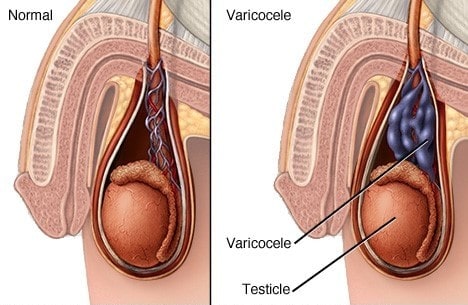
Left side varicocele is more common than the right side due to the joining of left testis vein with left kidney vein, as opposed to joining of right testis vein with inferior venacava directly.
What is the main cause of varicocele?
Varicocele is most commonly due to weakness of the valves in the veins in scrotum.
Is varicocele life-threatening?
Varicocele is not life-threatening if untreated, but intervention for varicocele may be considered if fertility is a concern. Not all varicoceles require surgery. The decision to undergo surgery or not will be decided based on several factors, which is best discussed with the treating andrologist after physical examination.
How does varicocele affect male fertility?
Following are the various oxidative stress mechanisms proposed about the role of varicocele in male infertility:
- Higher reactive oxygen species (ROS)
- Increase in the temperature of scrotum (scrotal hyperthermia)
- Low oxygen supply (hypoxia)
- Reflux of kidney and adrenal metabolites
- Hormonal imbalances
- Formation of antisperm antibodies
What is the surgery for varicocele?
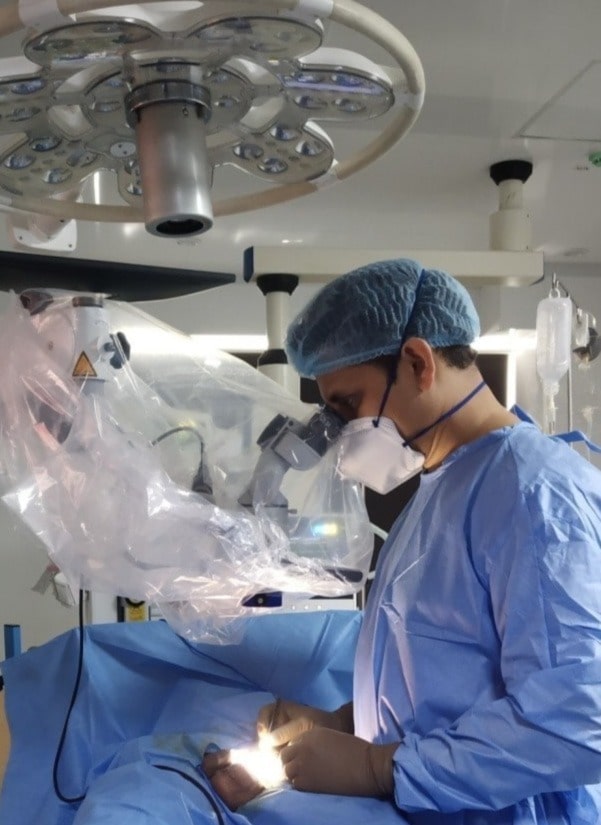
Subinguinal microscopic varicocele ligation (varicocelectomy) with the use of intra-operative handheld doppler yields the best results in terms of fertility outcomes with least complications.

When is varicocele surgery indicated in infertility?
Varicocele surgery is advised when all four criteria are met during infertility work-up: 1) Couple should have difficulty in conceiving, 2) Normal Female fertility, 3) Abnormal Semen analysis and 4) Clinically palpable varicocele (not just ultrasound diagnosed varicocele).
The varicocele surgery prior to IVF may also improve success rates of IVF-ICSI (Kohn JR, et al. Res Rep Urol. 2020).
Is varicocele allowed in the Indian Army?
Guidelines with regard to physical and medical standards are given in the notification of AFCAT 01/2023 for Indian Airforce candidates. The following scrotal and testis cases will be made unfit: Bilateral atrophied testis, Varicocele (Unilateral or bilateral), any abnormal location of testis (Unilateral or Bilateral), hydrocele and epididymal lesions e.g. cyst. Hence all varicoceles require surgical intervention, and a post-operative ultrasound should confirm absence of varicocele if joining Air Force or Army.
Who is the best doctor for Varicocele?
Dr Pramod Krishnappa is the best andrologist dealing with Men’s’ Sexual Health and Male Fertility. He has been trained extensively in high volume Andrology centres in Madrid (Spain), Belgrade, Budapest, Chicago, and New York.
Dr Pramod Krishnappa has undergone microsurgical training and a dedicated male infertility fellowship under Prof Dr Craig Niederberger at the University of Illinois at Chicago (UIC), who was the Chief Editor of “Fertility Sterility” Journal, the official journal of the American Society of Reproductive Medicine (ASRM).
Frequently Asked Questions
Yes. A varicocele can affect male fertility through mechanisms such as increased scrotal temperature, oxidative stress, reduced oxygen supply, hormonal changes, and antisperm antibodies. Therefore, varicocele and sperm quality should be evaluated even when a man does not have noticeable discomfort.
No. The page specifically states that not all varicoceles require surgery. During infertility evaluation, treatment is considered when there is difficulty conceiving, normal female fertility, an abnormal semen analysis, and a clinically palpable varicocele. Varicocele surgery should therefore not be recommended solely because an ultrasound shows a varicocele.
Semen analysis helps determine whether the varicocele is associated with an abnormal male-fertility parameter. The page includes an abnormal semen analysis as one of the four criteria for surgery during an infertility work-up, making semen analysis for varicocele an important part of the decision-making process.
It may. The page cites evidence suggesting that varicocele surgery before IVF-ICSI may improve treatment success in selected couples. Whether surgery should be performed before IVF after varicocele treatment depends on the couple's fertility evaluation and the treating specialist's assessment.
A varicocele that can be detected during physical examination provides different clinical information from one identified only through imaging. The page specifically requires a clinically palpable varicocele, along with the other infertility criteria, before recommending surgery in this context. Clinical varicocele assessment is therefore important before deciding on treatment.
The page identifies subinguinal microscopic varicocele ligation using an intra-operative handheld Doppler as the surgical approach associated with the best fertility outcomes and least complications. The microscopic approach allows careful identification of structures that need to be preserved during microsurgical varicocelectomy.
Yes. Normal female fertility is one of the criteria listed on the page for considering varicocele surgery during infertility evaluation. The decision also requires an abnormal semen analysis and a clinically palpable varicocele, so varicocele treatment for male infertility is based on the couple's complete evaluation rather than the male diagnosis alone.
Yes. The page explains that left-sided varicoceles are more common because of the way the left testicular vein joins the left kidney vein, compared with the direct drainage of the right testicular vein into the inferior vena cava. Left-sided varicocele is therefore the more frequently observed pattern.
Yes. The page states that varicocele is not life-threatening if untreated and that not every varicocele requires surgery. Management depends on factors such as fertility concerns and clinical findings, so varicocele evaluation is more appropriate than assuming every diagnosed varicocele needs an operation.
The evaluation may include a physical examination and semen analysis, with the overall fertility history of both partners taken into account. If the relevant criteria are met, the andrologist can discuss whether surgery is appropriate and which approach may be suitable for male fertility evaluation.