
Diminished ovarian reserve
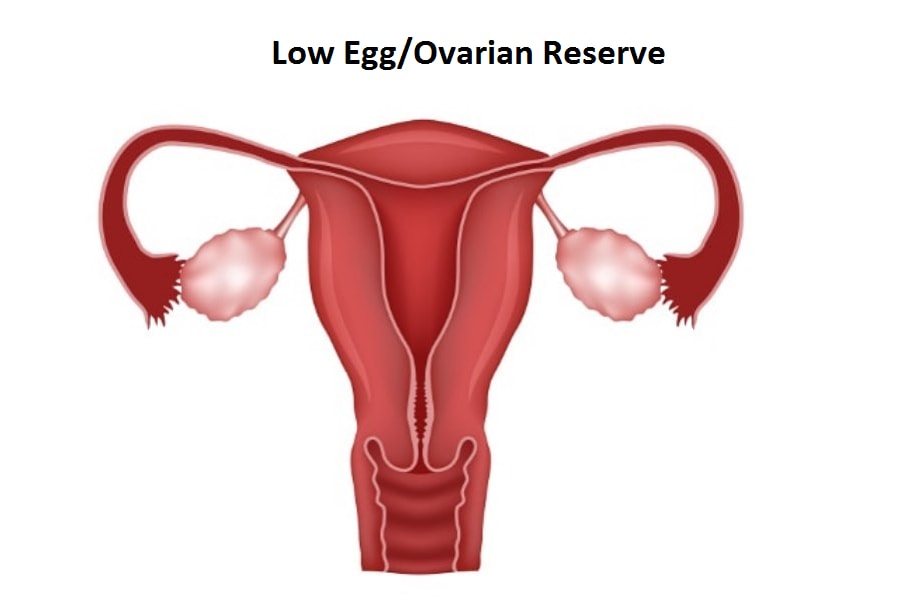
What is diminished ovarian reserve?
The eggs in a female’s ovary are formed in fetal life (when she was in her mother’s womb) No new eggs are formed during the life span of a woman. The available eggs in the ovary mature and ovulate in each cycle till menopause.
Ovarian reserve is a measure of the number of eggs remaining in the ovary, capable of fertilization and resulting in a pregnancy. When the number of eggs in the ovary are few, it is labelled ‘diminished ovarian reserve’
What can cause diminished ovarian reserve?
Aging is the most common cause of diminished ovarian reserve. A woman in her 20s has the maximum chance of conception (12% in each cycle) as the quality and quantity of eggs are good. With aging, there is a gradual decline in the quality and quantity of eggs. A woman at 40 years has a 5% chance of getting pregnant in each cycle.
Some women may have diminished ovarian reserve at a younger age. They may be born with fewer number of eggs or have rapid depletion of eggs due to the presence of antiovarian or antifollicular antibodies. This is usually associated with other immunological conditions in the woman.
Surgery in the pelvic region,oophorectomy(removal of ovaries, endometriosis, Chemotherapy, Radiation are other causes of diminished ovarian reserve.
Can a woman at 40 years get pregnant naturally?
It is possible for a woman to get pregnant naturally at this age, though the chances are low due to diminished egg number and quality. If planning for a pregnancy after 40 years, it is wiser to consult a fertility specialist at the earliest and get yourself and your partner investigated at the earliest.
What are the symptoms of diminished ovarian reserve?
Some women may have no symptoms due to this condition. Usually women with diminished ovarian reserve have shorter menstrual cycles i.e between 24-28 days cycle. This happens as the follicles tend to grow and ovulate faster in the cycle.
However, if you are <35 years age and trying for pregnancy for >1 year or of higher age and trying for pregnancy for >6months, get your ovarian reserve tested.
How is diminished ovarian reserve diagnosis made?
Your doctor takes a detailed menstrual history and past medical/ surgical history. If you have had a previous ovarian stimulation / IVF cycle, < 5eggs retrieved is an indication of poor ovarian response which may be due to diminished ovarian reserve.
Blood tests on day 2 of cycle with high FSH values, low AMH values is indicative of diminished ovarian reserve.
Ultrasound scan of ovaries show a low antral follicle count (<5-7) which is the total number of follicles 2-9mm in diameter during a day 2 menstrual cycle scan.
Is natural pregnancy possible with diminished ovarian reserve?
Studies have shown that natural pregnancy is possible with diminished ovarian reserve, provided all other fertility parameters such as regular ovulation, semen analysis, fallopian tube patency and normal uterus is normal. This is measure of the quantity of egg and not quality.
Younger women <30 years with diminished ovarian reserve have better chances of conception compared to older women.
How do you treat diminished ovarian reserve?
A few adjuvants such as DHEA , androgens have been proven to be of marginal benefit is improving the number of eggs retrieved in IVF cycles and chances of pregnancy. Well controlled studies are unavailable.
Planning pregnancy at the earliest or freezing embryos/ oocytes as part of fertility preservation can be offered to patients unwilling for pregnancy at the earliest.
If a woman with diminished ovarian reserve is planning IVF, the best IVF protocol is decided based on age, previous treatment history and quality of embryos in past cycles, if available. Pooling of embryos from 2-3 cycles, prior to embryo transfer is recommended in women with diminished ovarian reserve to provide best pregnancy rate.
Who is the best doctor for diminished ovarian reserve?
Dr Sneha J is a Gynecologist and best fertility specialist. She has completed MD OBG from the top university AIIMS , Delhi and University fellowship in Fertility/ Reproductive medicine. She had further training in dealing with these conditions, as a visiting fellow at high output centres in Madrid, Spain and Chicago,USA.
Frequently Asked Questions
No. AMH mainly provides information about ovarian reserve, particularly the estimated quantity of eggs remaining. A low result does not by itself mean pregnancy is impossible, and other factors such as age, ovulation, sperm health, fallopian-tube status, and the uterus also influence fertility. Low AMH and pregnancy should therefore be assessed in the context of the complete fertility picture.
Yes. Although age-related decline is a common reason for reduced ovarian reserve, younger women can also have fewer eggs or experience faster depletion. Previous ovarian surgery, endometriosis, chemotherapy, radiation, or certain immune-related conditions can contribute to diminished ovarian reserve in younger women.
Yes. Conditions affecting the ovaries and certain pelvic surgeries can reduce the number of remaining follicles. Women with a history of ovarian surgery or endometriosis may benefit from an individualized ovarian reserve assessment when planning pregnancy.
A higher FSH level, particularly when measured early in the menstrual cycle, can be associated with reduced ovarian reserve because the body may require more stimulation to encourage follicular development. FSH should not be interpreted alone; FSH fertility testing is usually considered alongside AMH, antral follicle count, age, and clinical history.
Antral follicle count estimates the number of small follicles visible in the ovaries during an ultrasound examination and can help predict how the ovaries may respond to stimulation. A lower count may indicate a risk of retrieving fewer eggs, but antral follicle count and IVF outcomes are not determined by this measurement alone.
There is no single recommendation for every woman. Age, duration of infertility, ovulation, semen analysis, fallopian-tube status, previous treatment, and the number of eggs expected from stimulation all influence the decision. A specialist can help determine whether natural conception with low ovarian reserve is reasonable or whether earlier treatment may be more appropriate.
Egg freezing may still be considered, but the number of eggs that can potentially be collected may be lower when ovarian reserve is diminished. Age and ovarian response are important when discussing egg freezing with low AMH, and a fertility specialist can explain the realistic options before treatment.
Women with diminished ovarian reserve may have fewer recruitable follicles, which can result in a lower number of eggs retrieved despite ovarian stimulation. The IVF protocol can be individualized according to age, previous response, ovarian reserve, and other factors as part of IVF for diminished ovarian reserve.
In selected women, embryos from multiple stimulation cycles may be accumulated before embryo transfer. The page specifically discusses pooling embryos from two or three cycles in some women with diminished ovarian reserve to potentially increase the number of embryos available for selection. Embryo pooling should be considered only after discussing the individual's age, embryo development, treatment history, and reproductive goals.
Yes. Many women do not experience obvious symptoms. Some may have shorter menstrual cycles, but ovarian reserve can decline without a clear change in how a woman feels. Diminished ovarian reserve symptoms are therefore not reliable enough on their own to identify the condition, and appropriate testing may be needed when clinically indicated.